 23 October 2026
Onion and Potato Farming Guide: How to Get Maximum Bulb Size
Start with the Real Causes of Small Bulbs and Tubers
Small onions and potatoes can mean less income after investing in seed, labour, irrigation and fertilizer. Buying a high-potassium fertilizer alone will not guarantee bigger bulbs. Results depend on variety, spacing, healthy roots, adequate water, balanced nutrition and pest management.
Potassium supports water regulation and the movement of sugars within plants. However, excessive potassium can waste money and disturb nutrient balance. Identify what limits your crop before spending more.
For more practical advice, read SeedPro’s onion farming guide for maximum bulb size.
Step 1: Prepare the Field Before Planting
Before planting: Choose suitable varieties and healthy planting material. Test soil where possible to understand pH and nutrient levels. Onions need well-drained soil and consistent moisture. Potatoes also require loose soil that allows tubers to expand.
Rotate crops, control weeds early and avoid compacted or waterlogged fields. Correct soil acidity according to test recommendations.
Read SeedPro’s complete onion farming guide in Kenya for more information on field preparation and crop management.
Step 2: Planting to Week 2: Establish Roots
During planting and early establishment, phosphorus supports root development, while nitrogen and other nutrients support initial growth. Apply a suitable basal fertilizer at the recommended rate, keeping it away from direct contact with seeds or seed tubers.
Transplant onions at recommended spacing. Plant healthy potato tubers at the correct depth and spacing for your variety.
SeedPro Siri Planta is an organo-mineral planting fertilizer formulated as NPK 10:24:4 with calcium oxide, magnesium oxide and sulphur. Consider it when its formulation suits the soil and crop requirements.
Learn more about SeedPro Siri Planta planting fertilizer.
Step 3: Weeks 2–4: Build a Healthy Canopy
Healthy leaves capture sunlight and produce carbohydrates needed for bulb and tuber growth. Maintain moisture, control weeds and monitor for nutrient deficiencies, thrips and potato blight.
Nitrogen supports vegetative growth, but excessive nitrogen later can delay onion maturity or encourage excessive foliage. Base top-dressing on crop condition, soil fertility and agronomic advice.
SeedPro Maximizer is a biostimulant containing humic and fulvic substances and other growth-supporting ingredients. It may complement crop nutrition, but cannot replace essential nutrients, irrigation or disease control. Follow the product label.
Step 4: Weeks 4–6: Bulb and Tuber Initiation
As onions begin bulb formation and potatoes initiate tubers, avoid stressing plants through dry soil, waterlogging or weed competition.
Potassium becomes important for water regulation and carbohydrate movement. Balanced nutrition is more useful than applying potassium alone while other nutrients are deficient.
SeedPro Siri Tunda, formulated as NPK 16:8:20, supplies potassium alongside nitrogen and phosphorus. Consider it where those nutrients are needed, following product instructions.
Step 5: Bulking Stage: Support Size and Quality
During bulb enlargement and tuber bulking, maintain consistent soil moisture. Drought followed by excessive watering can reduce growth and quality. Foliar feeding cannot compensate for damaged roots or inadequate water.
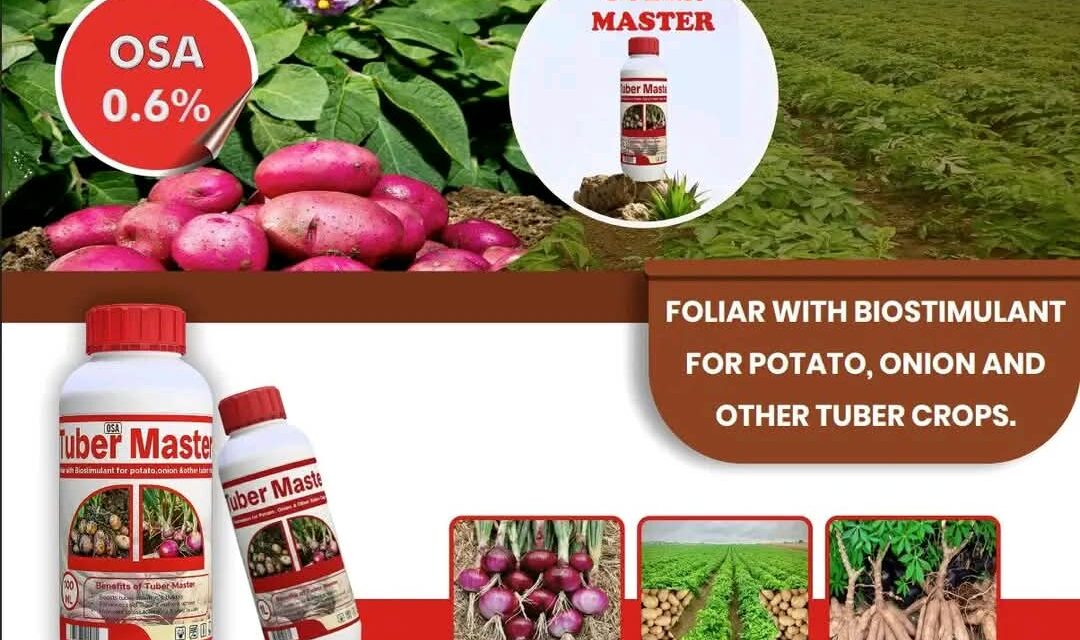
SeedPro Tubermaster is designed for underground crop development, including potatoes and onions. It can be considered during initiation and bulking.
Read SeedPro’s guide to foliar fertilizer for potatoes and onions for further application guidance. Potato farmers can also explore how Maximizer and Tubermaster support potato production.
Why Balanced Nutrition Matters
High-potassium fertilizers can be useful when crops need additional potassium. However, successful bulb and tuber development also depends on adequate nitrogen early in growth, phosphorus for establishment, healthy roots and sufficient moisture.
SeedPro’s approach combines appropriate basal nutrition with targeted feeding during crop development. Avoid applying several products together without checking compatibility, recommended rates and actual crop requirements.
Final Checklist
Choose suitable varieties, space correctly, irrigate consistently, control weeds and monitor pests. Follow product labels and keep records of applications and harvest results.
Large bulbs and tubers develop throughout the season, not through one spray. Match nutrition to crop stage, protect your soil and manage water carefully.
SeedPro products can support this programme when selected and applied correctly, helping farmers make informed decisions and protect their investment.
SeedPro Africa: Ni Siri Ya Mazao.