17 November 2025
Let’s Learn Money Day: What Every Maize Farmer Should Do During Weeding Season
A full guide on mid-season management, weed control and the nutrient needs of your maize crop
Maize farming has its own rhythm. Every season has a window where certain practices must be done on time, otherwise the entire crop feels the effect all the way to harvest. Right now, we are in the critical weeding period for many maize farmers across the region. This is the stage that decides whether your crop will push toward strong cobs, vigorous plants and good yields, or whether it will struggle under avoidable pressure.
This guide walks you through what your maize needs at this stage, why weed control is non-negotiable and how to shift your nutrition focus from roots to leaves so the crop gains its full photosynthesis power.
Why Weeding Now Determines Your Harvest Later
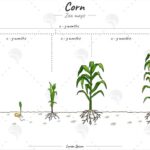
At this stage of growth, your maize plants are already past germination and early establishment. The roots have formed well, especially because most farmers used DAP at planting. DAP is rich in phosphorus, a nutrient that plays a huge role in root development. With that foundation already set, the crop is ready to push its energy upward.
The challenge right now is that weeds also love this period. They grow faster than maize, they compete fiercely and if ignored even for a short time, they take away nutrients and moisture the crop needs.
When weeds take over, three things happen:
1. Your maize loses nutrients
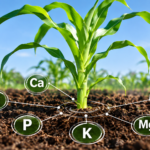
Weeds have an aggressive root system. They pull nitrogen, phosphorus, potassium and even trace elements much faster than your maize plants. This slows overall crop progress.
2. Your crop gets shaded
Most common weeds grow wide and tall. When they shade your maize, even for a few days, the maize leaves lose their ability to photosynthesize efficiently.
3. Yield potential drops early
Every time the crop is stressed at mid-season, the future cob size is affected. Weeds are one of the biggest contributors to yield loss worldwide, sometimes up to 50% if not controlled on time.
Weeding at the right moment is basically giving your maize room to breathe and grow. If you get this season right, you set yourself up for a smooth transition toward top dressing and later reproductive stages.
You Planted With DAP Now It’s Time to Shift Your Nutrition Focus
DAP remains one of the most common planting fertilizers because it gives the crop a strong foundation. Its high phosphorus content drives root expansion, helping the maize plant anchor well and access moisture and early nutrients.
But once the roots are established, the plant changes its nutritional priority.
At this stage, the crop begins to channel energy to foliage development: the stems, leaves and overall canopy. Why? Because leaves determine how much food the plant makes for itself through photosynthesis.
If your maize does not have healthy, green, active leaves during this period, even the best top dressing later won’t fully compensate for the lost photosynthesis time.
This is why nitrogen becomes the key nutrient from this point forward.
Why Nitrogen Is Now the Most Important Nutrient for Your Crop
Nitrogen is to maize what fuel is to a car. Without it, the plant cannot push its leaf growth, stem strength and overall vegetative energy.
Here’s what nitrogen does for maize at this stage:
Helps the crop produce deep green leaves
A healthy green leaf is a sign of good chlorophyll production. Chlorophyll is what captures sunlight and converts it into plant food. The greener the leaf, the more food your crop can make.
Strengthens the plant structure
Nitrogen is essential for building plant cells. Strong stems not only support healthy growth but also help the crop withstand wind, pests and even drought stress.
Supports future cob development
While the cobs have not formed yet, what your maize does now determines how it will support those cobs later. Nitrogen at this stage prepares the plant for grain filling.
Promotes uniform growth across the field
If some sections of the farm are yellowing or stunted, nitrogen is usually the first suspect. Feeding on time creates an even crop, which makes management easier all the way to harvest.
Signs That Your Maize Needs Nitrogen Right Now
If you walk through your farm and notice any of these signs, it’s a clear indication your crop is hungry for nitrogen:
• Pale or light-green leaves
• Yellowing starting from the tip moving downwards
• Stunted growth compared to the expected stage
• Thin stems
• Uneven crop height across the field
Even when symptoms haven’t appeared yet, it is always better to feed early rather than wait for visible stress. Nitrogen works best when applied before the crop shows hunger.
Weeding and Feeding Work Hand in Hand
One of the biggest mistakes farmers make is feeding the crop before clearing the farm. When weeds are still present, they will absorb a huge percentage of the nutrients you apply.
Think of it this way:
If you apply nitrogen on a weedy field, you have fed the weeds, not your maize.
This is why weeding should always be done first. Once the land is clear, nitrogen fertilizers such as CAN, urea or organomineral nitrogen blends can be applied and the maize will take full advantage.
If your soils are acidic or your area receives high rainfall, CAN is often a safer option. In drier conditions, urea works well if incorporated or applied just before rain.
Boosting Photosynthesis: Why Leaf Health Is Everything
Your maize plants make their own food every day using sunlight, water and nutrients. At mid-season, the goal is to maximize this internal food production.
Here’s where your management comes in:
Clean fields create better airflow
Weeding reduces humidity pockets around the crop. Good airflow reduces disease risk and helps leaves stay active.
Strong nitrogen nutrition boosts chlorophyll
The more chlorophyll your leaves have, the more food they make, and the faster the plant grows.
Large leaf surface increases energy storage
The crops that end up producing big cobs are the ones that had wide, healthy leaves at this stage. The plant stores energy early, then later channels it directly to the grains.
Practical Mid-Season Maize Routine You Should Follow
To get the most out of your crop during weeding season, here is a simple and effective routine:
1. Weed early and thoroughly
Clear all competitive weeds between the rows and around the plant base. Mechanical or hand weeding works well at this stage.
2. Apply your nitrogen at the right time
Once the field is clean, go in with your nitrogen source. Top dress before rain or irrigate after application.
3. Observe your crop closely
Walk through the field often. Check for color changes, insect activity or signs of nutrient stress.
4. Maintain soil moisture where possible
Nitrogen is best absorbed when the soil has good moisture. Dry soil limits uptake.
5. Keep an eye on uniformity
If some sections look weaker, consider spot feeding to balance the entire field.
Conclusion: Your Maize Needs You Most Right Now
This season is the turning point. The work you put in during weeding and early feeding determines whether your crop will push toward heavy, well-filled cobs or end up with average results. You already gave your maize a strong start with DAP, which built a solid root system. Now the next job is to support the leaves, the true engine of your crop.
By clearing weeds, feeding nitrogen on time and maintaining proper field conditions, you give your maize the chance to reach its full potential. Good farming is not just planting and waiting. It’s walking the journey with your plants, understanding what they need at each stage and responding on time.
This is the season where smart decisions make money.
Walk your crop through it, and it will reward you at harvest.