 26 May 2026
Why Kenyan Soils Are Tired And How Organo-Mineral Fertilizers Restore Fertility
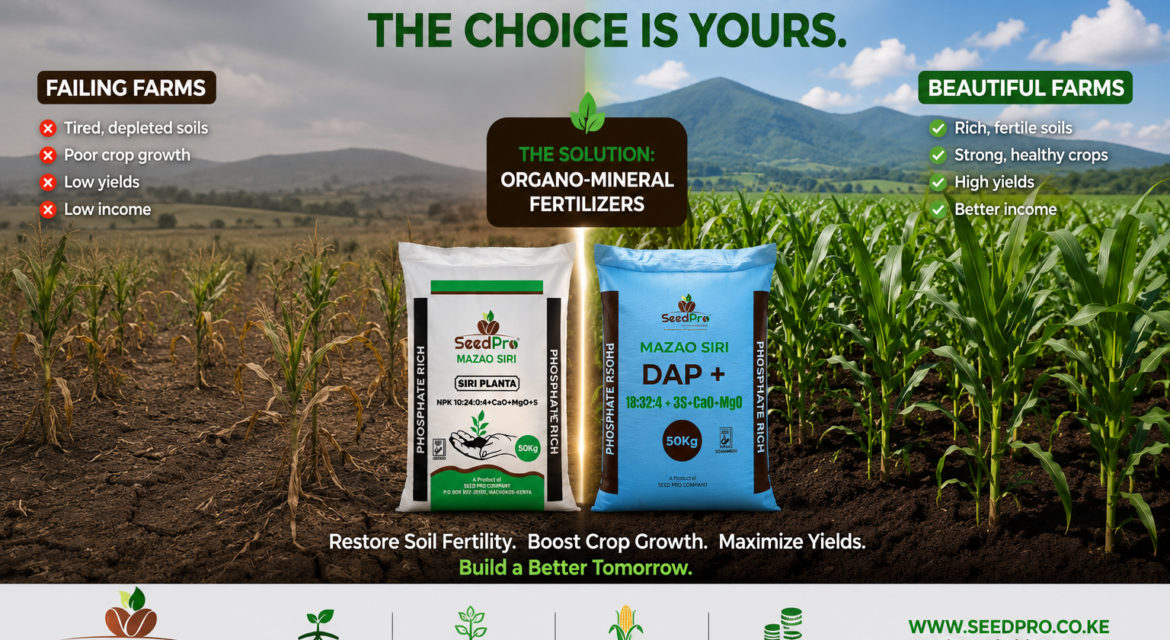
Across Kenya, many farmers are experiencing declining crop yields despite applying fertilizers every season. Crops are becoming weaker, soils are losing structure, and fertilizer costs continue rising. From maize farms in Trans Nzoia to avocado orchards in Murang’a and vegetable farms in Kirinyaga, the story is almost the same — Kenyan soils are becoming tired.
For years, continuous farming, poor soil management, overuse of synthetic fertilizers, and low organic matter have gradually reduced soil fertility in many parts of the country.
Today, many farmers are searching online for:
- best fertilizer for soil fertility
- how to improve soil health naturally
- why crops are not yielding
- sustainable farming in Kenya
- organo-mineral fertilizers in Kenya
The good news is that soil fertility can be restored. One of the most effective solutions modern farmers are adopting is the use of organo-mineral fertilizers.
In this guide, we explain why soils are degrading, how poor soil health affects crop yields, and how organo-mineral fertilizers help restore soil productivity for sustainable farming.
Learn more about organo-mineral fertilizers here:
https://seedpro.co.ke/understanding-organo-mineral-fertilizers/
Why Kenyan Soils Are Losing Fertility
Soil is a living system. Healthy soils contain:
- Organic matter
- Beneficial microbes
- Essential nutrients
- Proper structure
- Good water holding capacity
However, many farming practices have negatively affected soil health over time.
1. Continuous Farming Without Soil Replenishment
Many farmers grow crops season after season without replacing lost nutrients adequately.
Every harvest removes nutrients such as:
- Nitrogen
- Phosphorus
- Potassium
- Calcium
- Magnesium
- Zinc
Without proper replenishment, soils gradually become nutrient deficient.
2. Overuse of Synthetic Fertilizers
Synthetic fertilizers help crops grow quickly, but overreliance on them without adding organic matter can damage soil structure over time.
In many farms, excessive use of fertilizers like DAP and CAN has resulted in:
- Soil acidity
- Reduced microbial activity
- Nutrient imbalance
- Hard soil structure
- Poor water infiltration
This is why many farmers notice that fertilizer response keeps reducing every season.
3. Low Organic Matter in Soil
Organic matter is critical in maintaining healthy soils.
Benefits of organic matter include:
- Improved soil structure
- Better water retention
- Enhanced microbial activity
- Improved nutrient holding capacity
- Better root development
Unfortunately, many soils in Kenya have very low organic matter due to erosion, burning of crop residues, and continuous cultivation.
4. Soil Erosion and Nutrient Loss
Heavy rains and poor land management practices contribute to massive soil erosion in many regions.
Topsoil contains the highest concentration of nutrients and organic matter. When topsoil is washed away, crop productivity declines significantly.
Areas with sloping terrain are especially vulnerable to soil erosion.
Signs of Tired Soils
Many farmers do not realize their soils are degraded until crop performance drops severely.
Common signs of poor soil fertility include:
- Low yields despite fertilizer application
- Yellowing leaves
- Weak root systems
- Stunted crop growth
- Poor water retention
- Hard compacted soils
- Increased pest and disease pressure
- Poor flowering and fruit setting
If these symptoms continue season after season, the soil likely requires restoration.
What Are Organo-Mineral Fertilizers?
Organo-mineral fertilizers combine organic matter with mineral nutrients.
Unlike ordinary chemical fertilizers, organo-mineral fertilizers improve both:
- Crop nutrition
- Soil health
They provide essential nutrients while also rebuilding soil structure and supporting beneficial microbial activity.
This makes them ideal for sustainable farming in Kenya.
Read more:
https://seedpro.co.ke/understanding-organo-mineral-fertilizers/
Benefits of Organo-Mineral Fertilizers in Kenya
1. Improve Soil Structure
Healthy soil should be loose, well-aerated, and easy for roots to penetrate.
Organo-mineral fertilizers improve soil texture by increasing organic matter content.
Benefits include:
- Better root growth
- Improved aeration
- Reduced soil compaction
- Better drainage
Healthy roots absorb nutrients more efficiently, resulting in stronger crop growth.
2. Increase Water Retention
Water stress is becoming a major challenge due to changing weather patterns in Kenya.
Soils rich in organic matter retain moisture longer.
This helps crops survive dry conditions while reducing irrigation needs.
Improved water retention is especially important in:
- avocado farming
- vegetable farming
- maize production
- fruit farming
3. Improve Nutrient Use Efficiency
One major problem with ordinary fertilizers is nutrient loss through leaching.
Organo-mineral fertilizers help retain nutrients in the soil for longer periods.
This improves nutrient availability and fertilizer efficiency.
Farmers benefit from:
- Better crop response
- Reduced fertilizer wastage
- Improved yields
- Lower long-term fertilizer costs
4. Support Beneficial Soil Microbes
Healthy soils contain billions of beneficial microorganisms.
These microbes help:
- Break down organic matter
- Release nutrients
- Improve root health
- Suppress harmful pathogens
Excessive chemical fertilizer use can reduce microbial populations.
Organo-mineral fertilizers help restore biological activity in the soil.
5. Improve Long-Term Soil Fertility
Unlike synthetic fertilizers which mainly feed crops temporarily, organo-mineral fertilizers improve long-term soil productivity.
This makes farming more sustainable and profitable.
Farmers who invest in soil health today secure better harvests in future seasons.
Crops That Benefit From Organo-Mineral Fertilizers
Organo-mineral fertilizers can be used in many crops including:
- Hass avocado
- Maize
- Tomatoes
- Capsicum
- Onions
- Coffee
- Tea
- Watermelon
- Beans
- Bananas
- Mangoes
- Potatoes
High-value crops especially respond very well because of improved nutrient balance and better root development.
Why Soil Testing Is Important
Before applying fertilizers, farmers should conduct soil analysis.
Soil testing helps determine:
- Nutrient deficiencies
- Soil pH
- Organic matter levels
- Fertilizer requirements
This prevents overuse or underuse of fertilizers.
A proper soil fertility program should combine:
- Soil testing
- Organo-mineral fertilizers
- Foliar feeding
- Organic matter management
- Proper irrigation
Combining Organo-Mineral Fertilizers With Foliar Feeding
Foliar fertilizers provide quick nutrient absorption through leaves.
When combined with organo-mineral fertilizers, farmers achieve:
- Faster crop response
- Better vegetative growth
- Improved flowering
- Increased fruit setting
- Higher yields
Explore foliar fertilizer options here:
https://seedpro.co.ke/foliar-liquid-fertilizers/
Best Practices for Restoring Soil Fertility
To improve soil health naturally:
- Use organo-mineral fertilizers
- Add compost and manure
- Practice mulching
- Rotate crops
- Avoid excessive tillage
- Prevent soil erosion
- Conduct soil testing regularly
- Use balanced crop nutrition programs
Healthy soils produce healthier crops and higher profits.
Conclusion
Soil fertility is the foundation of profitable farming. Unfortunately, many Kenyan soils are becoming exhausted due to continuous farming and poor soil management practices.
The good news is that soil health can be restored through sustainable nutrition practices.
Organo-mineral fertilizers offer modern farmers a powerful solution by improving soil structure, increasing water retention, supporting beneficial microbes, and enhancing nutrient efficiency.
As more farmers adopt sustainable farming methods, organo-mineral fertilizers are becoming an important part of modern agriculture in Kenya.
For expert guidance on soil fertility management, organo-mineral fertilizers, and crop nutrition programs, visit: