 12 October 2026
Best Biostimulant in Kenya: How Maximizer’s Powerful Ingredients Support Crop Growth
Are you looking for the best biostimulant in Kenya to support your crops, improve nutrient use and help plants cope with challenging growing conditions?
Many farmers understand the importance of fertilizers. They apply DAP or NPK during planting and use other fertilizers as their crops develop. However, crop performance depends on more than the nutrients supplied. Plants must also be able to absorb and use those nutrients efficiently while maintaining normal growth under changing environmental conditions.
This is where plant biostimulants come in.
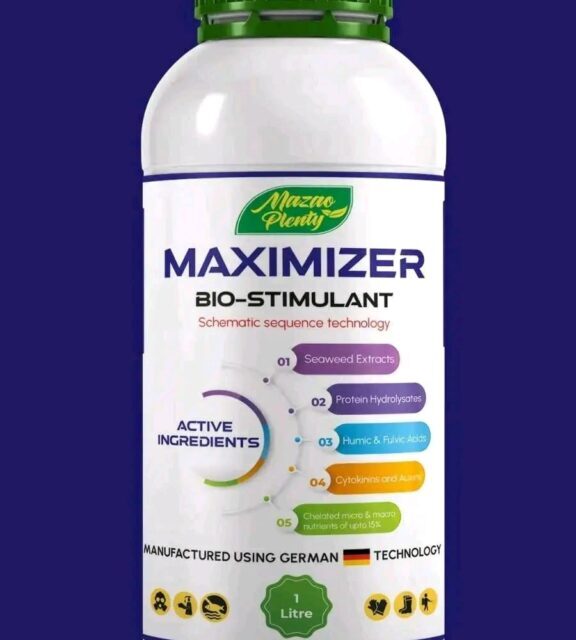
SeedPro Maximizer is a crop biostimulant formulated with ingredients including humic and fulvic acids, amino acid rich protein hydrolysates, seaweed extracts, cytokinins and auxins. Its formulation also includes macro and micronutrients, according to available product information.
But what do these ingredients actually do? How can they help a farmer growing tomatoes, capsicum, sukuma wiki, potatoes, maize, coffee or avocados?
In this guide, we explain the science behind Maximizer’s key ingredients, their roles in crop development and how farmers can incorporate biostimulants into a well planned crop nutrition programme.
What Is a Plant Biostimulant?
A plant biostimulant is a substance or formulation that supports plant growth by stimulating natural processes involved in nutrient use, plant development and responses to environmental stress.
Unlike a conventional fertilizer, whose primary purpose is to supply nutrients, a biostimulant is intended to improve how plants function and respond to their growing environment.
For example, a crop may have nutrients available in the soil but struggle to use them efficiently because of root limitations or environmental stress. A suitable biostimulant may help support root development, nutrient uptake or normal physiological processes.
Biostimulants do not replace fertilizers, good soil management, adequate water or crop protection. They work best as part of a complete crop management programme.
For farmers in Kenya, where crops experience different soil conditions, rainfall patterns and production challenges, understanding how these products work can help with making better agricultural decisions.
What Makes SeedPro Maximizer Different?
<text> <Entity value=”SeedPro Maximizer” category=”product” disambig=”Agricultural plant biostimulant”/> </text> is designed to support crop performance through a combination of ingredients that contribute to different plant processes.
Instead of looking at a biostimulant simply as another bottle to spray, it helps to understand the functions of its individual ingredients.
Here are the main ingredient groups associated with Maximizer and why they matter in crop production.
1. Humic Acids: Supporting Root Development and Nutrient Use
Humic acids are complex organic substances formed during the decomposition and transformation of organic matter.
In agriculture, humic substances are widely studied for their potential to influence root growth, nutrient availability and plant physiological processes.
How do humic acids help crops?
Supporting root development
A healthy root system gives plants more opportunity to explore the soil for water and nutrients. Humic substances can stimulate root growth and branching under suitable conditions, helping plants develop a more extensive root system.
Improving nutrient uptake
Humic substances can influence nutrient availability and the activity of root transport processes. Depending on the formulation and growing conditions, this may help plants use available nutrients more efficiently.
Supporting crop establishment
During early growth, crops need to establish functional roots and develop healthy shoots. Ingredients that support root development may be useful when incorporated into an appropriate crop management programme.
What does this mean for Kenyan farmers?
A tomato farmer wants seedlings to establish well after transplanting. A potato farmer wants a healthy root system to support crop development. A vegetable farmer needs crops that continue growing under appropriate nutrition and watering.
Humic acids may support some of the processes involved in these outcomes, although the response depends on the crop, application rate, formulation and growing conditions.
Research reviews have documented the potential of humic substances to influence root development, nutrient uptake and plant responses to environmental stress. <Link url=”https://www.sciencedirect.com/science/article/pii/S0304423815301771” title=”Read the scientific review on humic and fulvic acids in horticulture”/>.
2. Fulvic Acids: Supporting Nutrient Availability and Plant Uptake
Fulvic acids are another group of organic substances associated with humic materials. They have different chemical characteristics from humic acids, including generally lower molecular sizes and greater solubility across a wider range of pH conditions.
These characteristics influence how fulvic substances interact with nutrients and plant systems.
How do fulvic acids help crops?
Supporting nutrient movement and availability
Fulvic substances can interact with certain mineral nutrients and influence their availability. Their effects depend on the nutrient, formulation and conditions in the soil or spray solution.
Supporting nutrient uptake processes
Fulvic acids may influence root activity and plant nutrient transport processes. This can help crops make better use of available nutrients under suitable conditions.
Supporting plant metabolism
Some research indicates that fulvic substances can influence physiological processes involved in crop development. However, the response is not identical across all crops and formulations.
What does this mean for the farmer?
When farmers invest in fertilizers, they want their crops to use the available nutrients effectively.
Fulvic acids are included in some biostimulant formulations because of their potential role in nutrient interactions and plant physiological activity.
However, fulvic acids do not automatically make every nutrient in the soil available. They also cannot correct every nutrient deficiency or replace an appropriate fertilizer programme.
The goal is to support crop performance, not to assume that one ingredient can solve every soil fertility problem.
3. Amino Acids and Protein Hydrolysates: Supporting Plant Metabolism
Plants naturally produce amino acids, which are the building blocks of proteins. Proteins perform essential functions in plant cells, including supporting enzymes and the processes necessary for normal growth.
Protein hydrolysates are mixtures of peptides and amino acids produced by breaking down proteins.
When used in suitable biostimulant formulations, these ingredients may influence plant metabolism and responses to environmental stress.
How do amino acids help crops?
Supporting metabolic processes
Amino acids participate in numerous processes within plants. Depending on their composition and application, amino acid based biostimulants may influence metabolic activity and nutrient assimilation.
Supporting recovery from environmental stress
Plants experience stress from factors such as heat, drought, salinity and transplanting. Some amino acid and protein hydrolysate formulations have been studied for their potential to support plant responses to these conditions.
Supporting crop growth
Certain protein hydrolysates may influence root development, shoot growth and nutrient use. Their effectiveness depends on the source material, composition, dose and crop.
What does this mean for Kenyan farmers?
Consider a capsicum crop experiencing temporary environmental stress, or vegetable seedlings that need to establish after transplanting.
A suitable biostimulant containing amino acids or protein hydrolysates may support normal plant processes during recovery and growth.
However, a biostimulant is not a substitute for watering a drought affected crop, repairing damaged roots or correcting severe nutrient deficiencies.
Farmers should first address the underlying problem and use the product according to its instructions.
4. Seaweed Extracts: Supporting Crop Growth and Stress Responses
Seaweed extracts are widely used in agricultural biostimulants. Their composition varies depending on the seaweed species, extraction method and manufacturing process.
They may contain polysaccharides, organic compounds and other substances that influence plant physiological responses.
How do seaweed extracts help plants?
Supporting root and shoot development
Certain seaweed extracts have been associated with changes in root growth, branching and shoot development.
Influencing plant physiological processes
Some seaweed extracts contain compounds that can influence hormone related signalling and other processes involved in plant growth.
Supporting responses to environmental stress
Research has investigated seaweed based biostimulants for their potential to help crops respond to drought, salinity, temperature extremes and other environmental challenges.
The effects vary by product and crop. Not every seaweed extract contains the same compounds or produces the same results.
What does this mean for Kenyan farmers?
Farmers growing vegetables, fruit crops and other high value crops need to manage growth under changing environmental conditions.
A suitable seaweed based biostimulant may complement good crop nutrition and water management by supporting plant physiological processes.
It should not, however, be presented as a guarantee against drought, pests or diseases.
5. Cytokinins: Supporting Cell Division and Shoot Development
Cytokinins are a group of plant hormones involved in cell division, shoot development and several aspects of plant growth and ageing.
Plants produce their own cytokinins, particularly in actively growing tissues, including root tips. Some biostimulant ingredients can influence cytokinin related processes.
What roles do cytokinins play?
Cell division
Cytokinins participate in the regulation of cell division, an important process in plant growth and development.
Shoot development
They interact with other plant hormones to influence the formation and development of shoots and buds.
Leaf development and ageing
Cytokinins also participate in processes associated with leaf development and ageing. Their effects depend on the plant tissue, hormone balance and environmental conditions.
Why should farmers care?
For a farmer producing leafy vegetables, healthy shoot development is important for maintaining productive plants. In other crops, the balance between shoot growth and root development influences how the plant develops.
Cytokinins are part of the complex biological processes that regulate these functions.
However, applying a product associated with cytokinin activity does not guarantee more branches, more flowers or higher yields. The outcome depends on the formulation and crop conditions.
6. Auxins: Supporting Root Formation and Plant Development
Auxins are plant hormones involved in root initiation, cell elongation and the coordination of plant growth.
They interact with cytokinins and other hormones to regulate how roots, shoots and other plant structures develop.
How do auxins support plants?
Root initiation
Auxin activity plays an important role in the formation of new roots, including the initiation of adventitious roots in suitable plant tissues.
Root architecture
Auxins help regulate the formation and arrangement of lateral roots, contributing to the structure of the root system.
Coordination of plant growth
Auxins participate in several developmental processes and interact with other hormones to influence plant growth patterns.
What does this mean for farmers?
Healthy roots are essential for anchoring plants and absorbing water and nutrients.
For transplanted vegetables and other crops, root establishment is particularly important during early growth.
Ingredients that influence auxin related processes may contribute to root development, depending on the formulation and application conditions.
It is important to distinguish between a product that contains auxins and one that influences auxin related activity. Farmers should consult the product label for the precise composition and intended use.
7. Macro and Micronutrients: Complementing the Biostimulant Ingredients
Available product information for Maximizer also lists macro and micronutrients. The exact nutrient composition and concentrations should be confirmed from the current product label.
Macronutrients such as nitrogen, phosphorus and potassium are required in relatively large quantities for normal plant growth. Secondary nutrients such as calcium, magnesium and sulphur also perform essential functions.
Micronutrients such as iron, zinc, manganese, copper, boron and molybdenum are required in smaller quantities, but they remain important for normal plant development.
Why are these nutrients important?
Nitrogen contributes to protein formation and chlorophyll production.
Phosphorus participates in energy transfer and several metabolic processes.
Potassium supports water regulation, enzyme activity and other essential plant functions.
Micronutrients contribute to processes such as enzyme activity, photosynthesis and reproductive development, depending on the nutrient.
A formulation containing nutrients alongside biostimulant ingredients may provide complementary functions. However, the presence of these ingredients does not mean the product can replace a complete crop nutrition programme.
Farmers should confirm the guaranteed nutrient analysis and apply Maximizer according to its label.
How Do Maximizer’s Ingredients Work Together?
The main idea behind a multi ingredient biostimulant is that its components can contribute to different aspects of plant development.
Humic and fulvic acids may influence root activity and nutrient use. Amino acids and protein hydrolysates may support metabolic processes. Seaweed extracts may influence plant physiological responses, while cytokinins and auxins participate in the regulation of growth and development.
Any macro and micronutrients in the formulation contribute their own nutritional functions.
The important point is that these ingredients have different roles. They should not be treated as interchangeable, and their presence does not automatically establish that every possible benefit will occur in every crop.
A farmer should evaluate a biostimulant as one part of a broader production programme that includes suitable seed, soil fertility management, correct fertilizer application, irrigation, drainage and crop protection.
Which Crops Can Benefit From a Biostimulant?
Biostimulants are used across different crop categories, but the suitability of a specific product depends on its formulation and label instructions.
Vegetables
Tomatoes, capsicum, sukuma wiki, spinach and other vegetables require appropriate nutrition throughout their growth cycles. A suitable biostimulant may complement the crop’s nutrition programme by supporting particular physiological processes.
Potatoes
Potato growth involves the development of shoots, roots and tubers. A biostimulant may complement balanced nutrition and appropriate crop management, but it does not replace the nutrients needed for tuber development.
Coffee
Coffee plants require suitable nutrition and good management throughout vegetative growth, flowering and fruit development. Any biostimulant should be selected according to the product instructions and the crop’s requirements.
Avocados and other fruit crops
Root development, flowering, fruit development and environmental stress management are important considerations in fruit production. A suitable biostimulant may support some of these processes when used appropriately.
For every crop, the application rate and timing should follow the manufacturer’s instructions rather than a single schedule being applied to all crops.
How Should Farmers Use Maximizer?
Correct application matters as much as product selection.
Before using Maximizer:
- Read the current product label and confirm the recommended crops and application methods.
- Use the specified application rate and dilution.
- Apply at the recommended crop growth stage.
- Avoid spraying crops under unsuitable weather conditions or when they are severely water stressed.
- Check product compatibility before mixing it with fertilizers or pesticides.
- Observe crop performance and seek agronomic advice if the expected response does not occur.
For Maximizer, the application rate previously provided by SeedPro is 10 ml per 20 litres of water. Confirm that this rate remains consistent with the current product label before publication or use.
Biostimulants work best when farmers address the basic needs of their crops. A plant with damaged roots, severe nutrient deficiency or inadequate water may not respond as expected until those problems are addressed.
Is Maximizer the Best Biostimulant in Kenya?
The best biostimulant for a farmer is the one whose formulation suits the crop’s requirements and produces a useful, cost effective response under the farmer’s conditions.
There is no single product that can be declared the best for every crop, soil type, climate and production system without comparative evidence.
Maximizer offers a combination of ingredient groups associated with root development, plant metabolism, nutrient use and plant growth regulation. Its suitability should be assessed according to the crop, the recommended application and the farmer’s production goals.
For farmers looking for a biostimulant from SeedPro, Maximizer is a product worth enquiring about.
To learn more, visit the SeedPro biostimulants and wetters page or contact SeedPro on +254 119 098097 for product guidance.
Frequently Asked Questions About Biostimulants in Kenya
What is the best biostimulant in Kenya?
The best option depends on the crop, growth stage, product composition and intended purpose. Compare the ingredients, label instructions, evidence of performance and cost per application before choosing a product.
What is the difference between a biostimulant and a fertilizer?
A fertilizer primarily supplies essential plant nutrients. A biostimulant is intended to support natural plant processes related to nutrient use, development or responses to environmental stress. Some products contain both nutrient and biostimulant components.
What does Maximizer do in crops?
Maximizer is a SeedPro crop biostimulant formulated with ingredients associated with root development, plant metabolism and growth regulation. Its actual performance depends on the crop, formulation, application and growing conditions.
Can Maximizer replace NPK fertilizer?
No. A biostimulant should not be treated as a substitute for the essential nutrients supplied through an appropriate fertilizer programme.
Can biostimulants help crops under stress?
Some biostimulant formulations can support plant responses to environmental stress. However, they cannot eliminate the effects of severe drought, waterlogging, pests or diseases. Good crop management remains essential.
How much Maximizer should I use per 20 litres of water?
SeedPro’s previously provided application rate is 10 ml per 20 litres of water. Check the current product label to confirm the correct rate, crop suitability and application interval.
Conclusion: Understand the Ingredients Behind Better Crop Management
Successful farming involves more than supplying nutrients. Farmers also need to understand how their crops grow, how roots absorb nutrients and how plants respond to their environment.
The ingredients used in plant biostimulants can support different processes involved in crop development. Humic and fulvic acids, amino acids, protein hydrolysates, seaweed extracts and plant growth regulators each have different functions.
SeedPro Maximizer brings several of these ingredient groups together in one formulation, giving farmers an option to consider as part of a balanced crop management programme.
Before choosing any biostimulant, understand what it contains, what it is intended to do and whether it is suitable for your crop.
For guidance on Maximizer and other SeedPro crop nutrition products, contact +254 119 098097.
SeedPro Africa. We Grow More With Less. Ni Siri Ya Mazao.