 28 May 2026
Onion Farming Guide in Kenya for Maximum Bulb Size
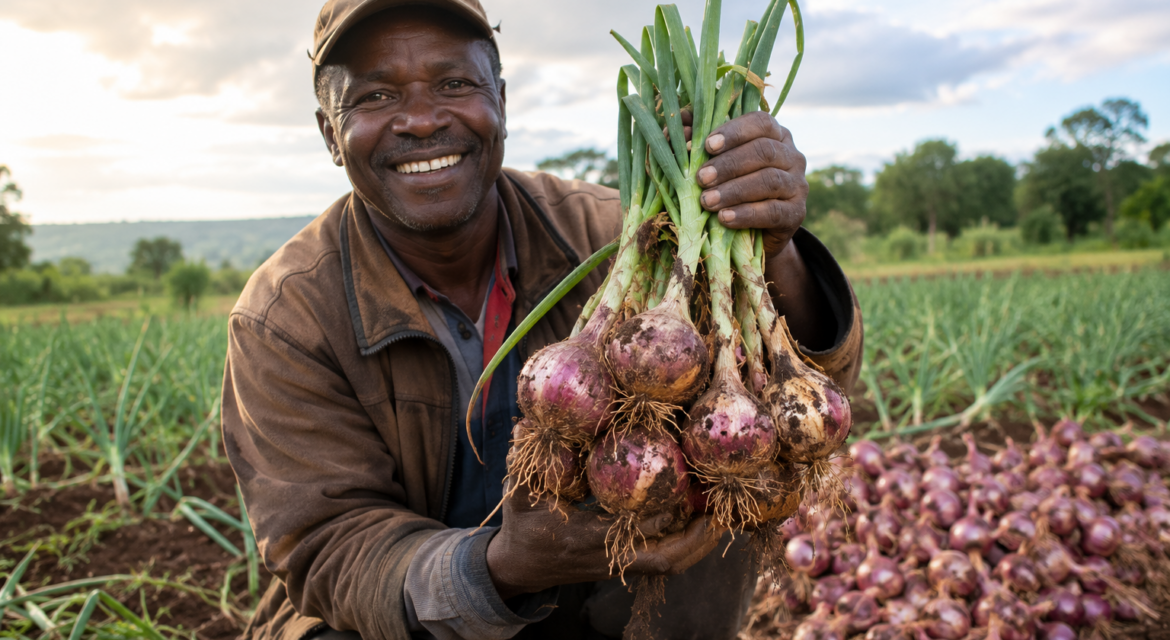
Onion farming in Kenya has become one of the most profitable agribusiness ventures for small scale and commercial farmers. The demand for onions remains high throughout the year, making it a reliable source of income for many farmers across the country.
However, many farmers still struggle with small bulbs, poor bulb formation, low yields, and diseases caused by poor nutrition and weak crop management.
To achieve large onion bulbs and better market quality, farmers must focus on proper soil preparation, irrigation, spacing, and most importantly, a good fertilizer and foliar feeding program.
In this guide, we explain the best onion farming practices in Kenya and how products like Siri Planta, Sure P, Maximizer, and Tubermaster can help improve bulb size and overall yield.
Best Conditions for Onion Farming in Kenya
Onions perform well in areas with:
- Well drained fertile soils
- Moderate temperatures
- Consistent water supply
- Good sunlight exposure
The best soil pH for onions ranges between 6.0 and 7.0. Farmers are encouraged to conduct soil testing before planting to understand nutrient deficiencies and improve fertilizer application.
You can also read our guide on soil nutrition and crop deficiencies to better understand your soil health.
Land Preparation for Onion Farming
Proper land preparation is important for root development and bulb expansion.
Before planting:
- Plough the land thoroughly
- Remove weeds
- Add organic manure
- Prepare raised beds if necessary
Adding organic matter improves soil structure and water retention, which supports better bulb formation.
Best Onion Varieties in Kenya
Some of the commonly grown onion varieties in Kenya include:
- Red Creole
- Red Pinoy
- Bombay Red
- Jambar F1
Choosing a high yielding variety combined with proper nutrition greatly increases profits.
Importance of Nutrition in Onion Farming
Onions are heavy feeders and require a balanced supply of nitrogen, phosphorus, potassium, calcium, sulfur, and micronutrients throughout their growth cycle.
Poor nutrition often leads to:
- Small bulbs
- Thin necks
- Yellowing leaves
- Poor bulb uniformity
- Reduced shelf life
A good nutrition program helps onions develop strong leaves, healthy roots, and large bulbs.
Recommended Fertilizer and Foliar Feeding Program for Onions
1. Early Growth Stage
At the early vegetative stage, onions need nutrients that support root development and vigorous leaf growth.
Use Maximizer
Maximizer is a foliar fertilizer rich in essential micronutrients and growth promoting elements that support healthy vegetative growth.
Benefits of Maximizer in onion farming:
- Promotes rapid plant establishment
- Encourages healthy green leaves
- Improves nutrient uptake
- Reduces stress after transplanting
Healthy leaves are very important in onion farming because the bulb size directly depends on leaf development.
Spray Maximizer every 7 to 10 days during the early stages.
2. Root Development and Plant Strengthening
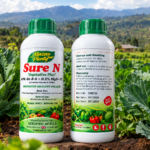
Use Sure P
Sure P is a phosphorus-rich fertilizer that supports root formation and energy transfer within the plant.
Phosphorus is critical during the early growth stages because it:
- Stimulates strong root growth
- Enhances nutrient absorption
- Supports early plant vigor
- Improves crop uniformity
Onions with stronger roots absorb nutrients and water more efficiently, leading to better bulb formation later in the season.
Sure P also helps crops establish quickly after transplanting.
3. Bulb Formation Stage
This is the most important stage in onion farming because it determines the final bulb size and market value.
Use Siri Planta
Siri Planta is a balanced organomineral fertilizer designed to improve plant health, bulb enlargement, and crop productivity.
Its nutrient combination supports:
- Bulb expansion
- Strong vegetative growth
- Improved nutrient availability
- Better crop performance under stress
Benefits of Siri Planta in onions:
- Encourages larger bulb formation
- Improves bulb uniformity
- Enhances overall crop vigor
- Supports healthy soil activity
Applying Siri Planta during bulb initiation helps the crop direct more energy towards bulb development.
4. Bulb Enlargement Stage
Use Tubermaster
Tubermaster is highly beneficial during the bulb enlargement stage because it supplies nutrients that support sizing and quality improvement.
Benefits of Tubermaster:
- Promotes bigger bulbs
- Improves bulb firmness
- Enhances crop uniformity
- Supports better market quality
- Improves shelf life after harvesting
Tubermaster helps onions achieve better size and weight, which directly increases farmer profits.
Farmers targeting export markets or high value local markets should maintain proper nutrition during this stage.
Irrigation in Onion Farming
Onions require consistent moisture, especially during bulb formation.
Important irrigation tips:
- Avoid water stress
- Do not overwater
- Reduce irrigation near harvesting to improve bulb storage quality
Drip irrigation is highly recommended because it improves water efficiency and reduces disease pressure.
You can also learn more about greenhouse and drip irrigation farming on our farming resources page.
Common Mistakes That Reduce Onion Bulb Size
Many farmers fail to achieve large bulbs because of:
- Poor spacing
- Nutrient deficiencies
- Inadequate irrigation
- Excess nitrogen late in growth
- Weed competition
- Delayed pest and disease control
Proper crop monitoring and timely nutrition application are key to success.
Pest and Disease Management
Common onion pests and diseases in Kenya include:
- Thrips
- Downy mildew
- Purple blotch
- Onion flies
Farmers should practice:
- Crop rotation
- Field sanitation
- Timely spraying
- Proper spacing for airflow
Healthy, well nourished crops are usually more resistant to diseases and environmental stress.
Harvesting Onions
Onions are ready for harvesting when:
- Leaves start drying and falling over
- Bulbs reach full size
- Outer skins become firm
After harvesting:
- Cure onions in a dry, shaded area
- Avoid direct sunlight
- Store in a well ventilated place
Proper curing improves shelf life and market quality.
Final Thoughts
Successful onion farming in Kenya depends heavily on proper crop nutrition and management. Farmers who follow a balanced fertilizer and foliar feeding program often achieve larger bulbs, better quality harvests, and higher profits.
Products like Maximizer, Sure P, Siri Planta, and Tubermaster help onions develop strong roots, healthy leaves, and large marketable bulbs when used correctly.
For farmers looking to improve onion yield and bulb size, investing in proper nutrition is one of the smartest decisions you can make.
For more information on onion nutrition programs and crop management solutions, contact SeedPro Kenya today.
Phone: +254 719 332 102