 02 November 2026
Best Fertilizer for Cabbage in Kenya: How to Grow Quality Cabbages and Maximize Profit
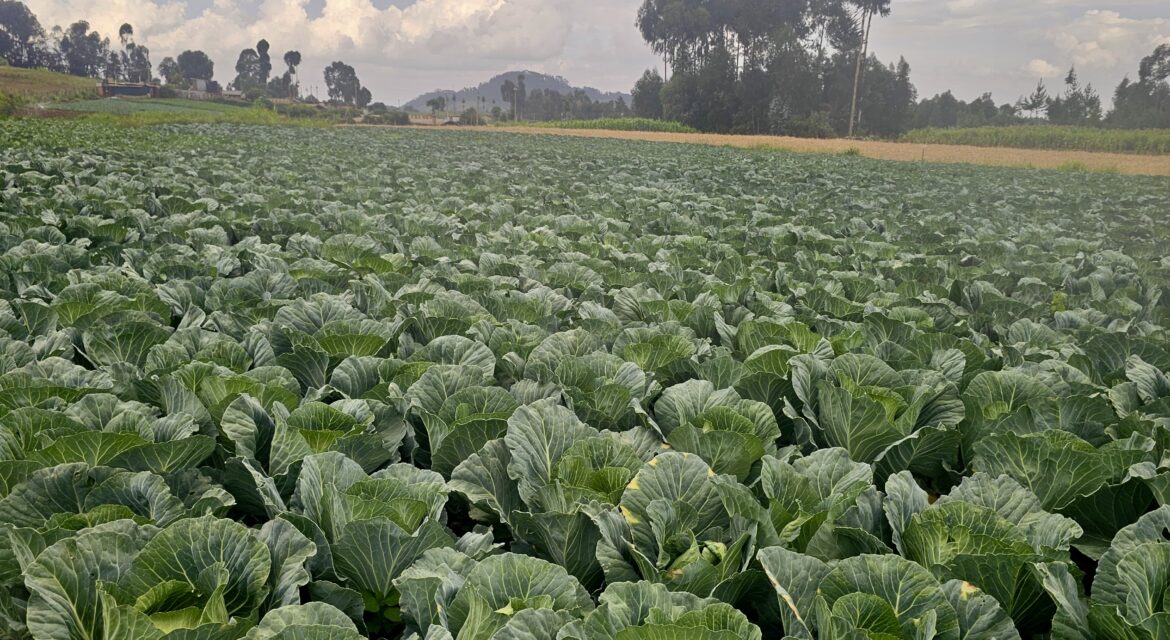
Cabbage farming is one of the most popular vegetable farming ventures in Kenya. From smallholder farmers supplying local markets to large-scale growers supplying supermarkets, hotels and institutions, cabbage remains an important source of income and food.
However, there is something every cabbage farmer needs to understand: producing cabbages and making money from cabbage farming are two different things.
Some farmers harvest when cabbage prices are high and enjoy attractive returns, while others harvest at the same time as thousands of other farmers and struggle to find buyers. Some produce large, firm and uniform cabbage heads that attract buyers, while others experience small heads, uneven growth and poor-quality produce.
So, what makes the difference?
Successful cabbage farming requires good timing, proper crop nutrition, healthy soils, consistent moisture and a market plan. In this guide, we explore how to grow quality cabbages in Kenya, why cabbage prices fluctuate and how farmers can make smarter production decisions.
Why Do Some Cabbage Farmers Get Better Prices Than Others?
Have you ever visited a market and found cabbage selling at a surprisingly high price, only to discover that some farmers are selling their produce at much lower prices?
This is not necessarily because some farmers have better cabbage varieties or use more fertilizer. Several factors influence cabbage prices.
1. Supply and demand
Cabbage prices are strongly influenced by the amount of produce available in the market.
When many farmers plant at approximately the same time, their crops often mature within a similar period. This can create an oversupply of cabbage.
When traders have more cabbages than they can sell, farmers may be forced to lower their prices to find buyers.
On the other hand, when fewer farmers have mature cabbage ready for harvesting, available supplies can become limited. If demand remains strong, prices may increase.
This is one reason why cabbage farmers sometimes experience very different returns even when they produce similar quantities.
2. Weather and production conditions
Weather plays an important role in cabbage production.
Drought, inadequate rainfall, irregular irrigation and extreme weather conditions can affect crop growth and reduce the amount of marketable produce reaching the market.
When production is affected across several growing areas, supplies may reduce and prices can rise.
However, farmers should not depend on weather-related shortages as their only marketing strategy. Planning production around expected weather conditions and available water is more reliable.
3. Quality and market requirements
Not every cabbage attracts the same price.
Buyers generally look for firm heads, good size, uniformity, freshness and minimal pest or disease damage.
Farmers supplying supermarkets, hotels, institutions and other organised buyers may need to meet specific grading and quality requirements.
A farmer who understands these requirements before planting has an advantage because crop management can be planned around the intended market.
4. Location and transport costs
A cabbage price in Nairobi may be different from the price offered to a farmer in Nakuru, Nyandarua, Murang’a or Eldoret.
Transport costs, availability of buyers, market demand and the distance between farms and markets all influence the final amount a farmer receives.
This is why farmers should compare actual farm-gate offers and the cost of transporting produce before deciding where to sell.
How Can a Smart Farmer Avoid Selling Cabbages During a Market Glut?
The answer starts before transplanting.
Smart cabbage farming involves thinking about the market while planning production, rather than waiting until harvesting.
Here are some important practices.
1. Research your market before planting
Find out which buyers purchase cabbages in your area. Talk to traders, vegetable vendors, supermarkets, hotels and institutions.
Understand their preferred cabbage sizes, varieties, quantities and delivery arrangements.
2. Monitor market prices
Do not depend on rumours or prices shared in farming groups.
Check prices in the markets where you intend to sell. Compare wholesale and retail prices and establish what buyers are actually offering at the farm gate.
The Kenya Agricultural Market Information System (KAMIS) is one resource farmers can use to monitor agricultural market information.
3. Stagger your planting
Instead of transplanting your entire farm on one day, consider planting in batches at intervals that match your market plan.
This can spread harvesting over several weeks and reduce the risk of having your entire harvest mature during one market glut.
However, staggered planting should be planned around seed availability, water, labour and the expected market window.
4. Consider off-season production
Farmers with reliable irrigation may have an opportunity to produce when fewer farmers are harvesting.
This requires proper planning because off-season production can involve additional irrigation and management costs.
5. Build relationships with buyers
Do not wait until your cabbages are ready before looking for a market.
Establish relationships with potential buyers early and understand their purchasing arrangements.
A good buyer relationship can be just as important as producing a good crop.
How to Grow Quality Cabbages in Kenya
Good market timing will not compensate for poor crop management. Farmers still need to produce healthy, marketable cabbages.
1. Start with good-quality seedlings
Choose a cabbage variety suited to your production area, climate, target market and preferred maturity period.
Use healthy, vigorous seedlings with well-developed roots.
Avoid transplanting weak, diseased or excessively overgrown seedlings because they may struggle to establish in the field.
2. Prepare your soil properly
Cabbage performs best in fertile, well-drained soils with good moisture availability.
Before planting, prepare your land properly and incorporate well-decomposed organic manure where available.
Soil testing can help identify nutrient deficiencies, soil acidity and other limitations that may affect production.
Healthy soil supports root development and helps plants access the nutrients and water they need throughout the growing season.
3. Apply the right planting fertilizer
Cabbage requires balanced nutrition, especially during establishment and vegetative growth.
Phosphorus is important for early root development, while nitrogen supports healthy leaf development. Potassium also contributes to plant functions, water regulation and crop development.
A suitable basal fertilizer should be selected according to soil conditions and crop requirements.
SeedPro Siri Planta is an organo-mineral planting fertilizer formulated with NPK 10:24:4, calcium oxide, magnesium oxide and sulphur.
Its phosphorus-rich formulation makes it a suitable option to consider in a cabbage planting programme where the soil and crop nutrient requirements support its use.
Apply according to the product recommendations and ensure fertilizer is properly incorporated into the soil without direct contact with young roots.
4. Support soil health with Mr Conditioner
Good cabbage production starts with the condition of the soil.
Repeated cropping without proper soil management can contribute to declining soil organic matter and poor soil structure.
SeedPro Mr Conditioner is a soil conditioner that can be incorporated into a soil management programme alongside appropriate organic matter and mineral nutrition.
The aim is to support better soil conditions for root development, nutrient management and sustainable crop production.
Remember that a soil conditioner does not replace the need for appropriate fertilization, organic matter management or soil testing.
5. Promote healthy vegetative growth
Before cabbage starts forming its head, it needs to establish a strong canopy of healthy leaves.
These leaves are important because they capture sunlight and produce the energy required for subsequent crop development.
Insufficient nitrogen can result in poor vegetative growth and smaller plants. However, excessive nitrogen can encourage overly vegetative growth and contribute to head splitting or poor crop quality.
SeedPro Sure N and Sure Grow High Nitrogen can be considered in the crop nutrition programme where additional nitrogen is required.
Sure Grow High Nitrogen has an NPK formulation of 44:8:7, with magnesium and micronutrients.
SeedPro Maximizer is another option for supporting crop nutrition programmes. It contains humic and fulvic substances, amino acids and plant growth regulators.
Use these products according to their labels and the actual needs of the crop. They should complement good soil fertility management rather than replace it.
6. Support head formation and development
Cabbage head formation is one of the most important stages of production.
During this period, plants require adequate nutrition and a consistent supply of moisture.
Potassium plays an important role in plant water regulation, enzyme activation and the movement of sugars within plants.
Where additional potassium is needed, SeedPro Sure Grow High Potassium can be incorporated into the foliar nutrition programme according to the product label.
Avoid assuming that applying more fertilizer automatically produces bigger cabbage heads. Good spacing, appropriate variety selection, sufficient moisture, healthy roots and balanced nutrition all matter.
7. Pay attention to calcium nutrition
Calcium is important in maintaining cell wall structure and the strength of growing plant tissues.
Inadequate calcium availability and poor movement of calcium within the plant can contribute to physiological disorders.
SeedPro Calci Topper can be considered as part of a calcium nutrition programme during cabbage development, following the recommended application method and timing on its label.
For soil-applied top dressing, use a suitable nutrient source based on soil testing and crop requirements. Do not assume a calcium foliar product replaces all soil-applied nutrients.
8. Maintain adequate moisture
Cabbage has a relatively shallow root system and requires a consistent supply of water, especially during head formation.
Water stress can slow growth and affect head development.
Sudden heavy watering after a prolonged dry period can also contribute to head splitting, particularly when heads are approaching maturity.
Where irrigation is available, maintain a consistent watering schedule and avoid allowing the crop to experience prolonged moisture stress.
9. Scout for pests and diseases
Cabbage farmers should regularly inspect their crops for pests and diseases.
Common challenges include diamondback moth, aphids, cabbage loopers, cutworms and diseases such as black rot.
Early detection makes management easier.
Use integrated pest management practices, maintain field hygiene, rotate crops and select appropriate registered crop protection products when necessary.
The SeedPro Cabbage Nutrition Programme
Every cabbage field is different. Soil fertility, variety, rainfall, irrigation, planting density and crop condition all influence fertilizer requirements.
The following is a general guide to how SeedPro products can fit into different stages of cabbage production.
Planting and establishment
- Siri Planta: organo-mineral basal fertilizer to support early crop establishment.
- Mr Conditioner: soil conditioning as part of soil preparation and organic matter management.
Vegetative growth
- Sure N: where additional nitrogen is required.
- Sure Grow High Nitrogen: supports the crop nutrition programme during leaf development.
- Maximizer: complements crop nutrition with its humic and fulvic substances, amino acids and plant growth regulators.
Head formation and development
- Sure Grow High Potassium: where additional potassium is required.
- Calci Topper: for calcium nutrition according to the recommended application method.
- Other appropriate foliar feeds: selected according to crop condition and identified nutrient requirements.
Throughout the production cycle
Monitor crop growth, soil moisture, nutrient availability and pest pressure. Do not apply every product simply because it is available. A good fertilizer programme should respond to the crop’s actual needs.
For the correct application rates and product combinations, consult a SeedPro agronomist.
A Farmer’s Field Lesson: Quality Production and Good Timing Matter
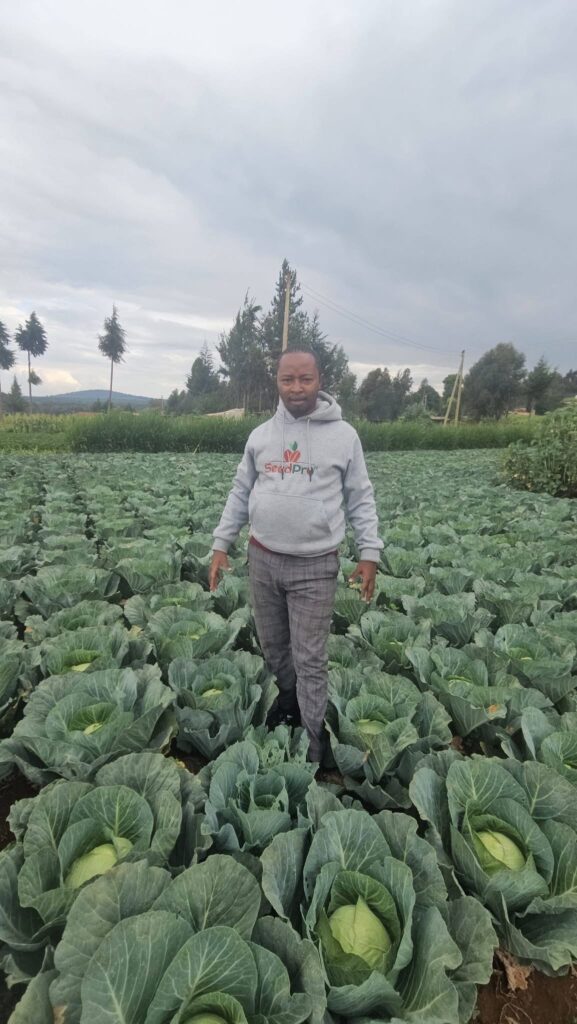
A cabbage farmer in a productive field. A good example of the importance of crop management, quality production and planning for the market.
Look at this cabbage field.
The farmer has invested time, resources and effort into producing a healthy crop with well-developed cabbage heads.
But there is another important lesson here.
Producing quality cabbages is only one part of successful farming. The next step is getting the timing and market right.
A farmer who produces good-quality cabbages and reaches the market when supply is limited may have an opportunity to negotiate better prices than a farmer harvesting when the market is flooded with similar produce.
This is why we encourage farmers to think beyond planting and harvesting.
Know your market. Understand your crop’s growth cycle. Maintain soil fertility. Invest in proper crop nutrition and plan your harvesting period.
Good farming is not just about what you harvest. It is also about when and how you sell it.
Why Choose SeedPro for Your Cabbage Farming Programme?
At SeedPro Africa Ltd, we believe that productive farming begins with understanding the soil, the crop and its nutritional requirements.
Our organo-mineral fertilizers and crop nutrition solutions are developed to support farmers at different stages of crop production.
From Siri Planta for planting to Mr Conditioner for soil management, Maximizer for crop nutrition support, Sure N and Sure Grow products for targeted nutrient supply, and Calci Topper for calcium nutrition, SeedPro offers products that can be incorporated into a well-planned cabbage production programme.
Our goal is to help farmers make informed decisions about crop nutrition while building better farming practices.
Final Thoughts: Farm Smart, Harvest Quality and Sell at the Right Time
Cabbage farming can be rewarding, but profitability requires more than simply planting a large acreage.
Farmers need to understand market demand, plan their production cycles, maintain healthy soils, provide balanced nutrition and produce cabbages that meet buyer expectations.
Do not wait until harvesting to start thinking about your market.
Plan before planting, monitor your crop throughout the season and make informed decisions at every stage.
With the right farming practices and an appropriate crop nutrition programme, you can work towards producing quality cabbages and improving your chances of better market returns.
SeedPro Africa Ltd. Ni Siri Ya Mazao.
For cabbage nutrition advice and information about SeedPro products, contact our agronomy team on +254 119 098097.