 21 July 2026
How to Correct Soil Acidity in Kenya Using Agricultural Lime
How to Correct Soil Acidity in Kenya Using Agricultural Lime
Have you ever applied fertilizer but still harvested poor yields?
Many Kenyan farmers assume the problem is the fertilizer, yet the real issue could be soil acidity. When soil becomes too acidic, crops cannot effectively absorb essential nutrients, even when those nutrients are present in the soil.
The good news is that soil acidity can be corrected. Applying agricultural lime at the right time and in the correct quantity can restore soil health, improve fertilizer efficiency, and increase crop yields.
What Is Soil Acidity?
Soil acidity refers to a low soil pH. Soil pH measures how acidic or alkaline the soil is on a scale of 0 to 14.
- A pH below 7 is acidic.
- A pH of 7 is neutral.
- A pH above 7 is alkaline.
Most crops grow best in soils with a pH between 6.0 and 7.0, where nutrients are readily available for plant uptake.
You can learn more about soil pH from the Kenya Agricultural and Livestock Research Organization (KALRO):
https://www.kalro.org
Why Are Kenyan Soils Becoming More Acidic?
Several factors contribute to soil acidification over time.
Continuous Use of Acidifying Fertilizers
Repeated application of fertilizers such as urea and conventional CAN without balancing soil pH can gradually increase soil acidity.
Heavy Rainfall
Many high-rainfall regions lose important nutrients such as calcium and magnesium through leaching, leaving the soil more acidic.
Continuous Cropping
Growing crops season after season without replenishing soil nutrients gradually lowers soil quality.
Soil Erosion
Topsoil contains much of the organic matter and nutrients needed for healthy crops. When it is washed away, soil fertility declines rapidly.
Signs Your Soil May Be Acidic
You may have acidic soil if you notice:
- Stunted crop growth
- Yellowing leaves despite fertilizer application
- Poor root development
- Small yields
- Weak stems
- Low fertilizer response
- Poor nodulation in beans
- Reduced earthworm activity
These symptoms are often mistaken for fertilizer deficiencies when the real problem is poor nutrient availability caused by low soil pH.
Which Areas in Kenya Have Acidic Soils?
Acidic soils are common in several agricultural regions, including:
- Murang’a
- Nyeri
- Kiambu
- Embu
- Kirinyaga
- Meru
- Kericho
- Kisii
- Kakamega
- Bungoma
- Parts of Trans Nzoia
- Nandi
A soil test is the most reliable way to determine your soil’s pH before applying lime.
Why Soil Testing Matters
Before investing in lime or fertilizer, it is advisable to conduct a soil test.
A soil analysis tells you:
- Soil pH
- Nutrient levels
- Organic matter content
- Lime requirement
- Fertilizer recommendations
Soil testing helps you avoid unnecessary costs and apply the correct amendments.
Read our guide on How to Interpret a Soil Test Report in Kenya. (Internal Link)
How Agricultural Lime Corrects Soil Acidity
Agricultural lime supplies calcium and sometimes magnesium while neutralizing excess soil acidity.
As soil pH improves:
- Nutrients become more available.
- Roots grow deeper.
- Beneficial soil microbes become more active.
- Fertilizer efficiency increases.
- Crop yields improve.
Instead of applying more fertilizer every season, correcting soil pH allows crops to utilize nutrients already present in the soil more efficiently.
Types of Agricultural Lime
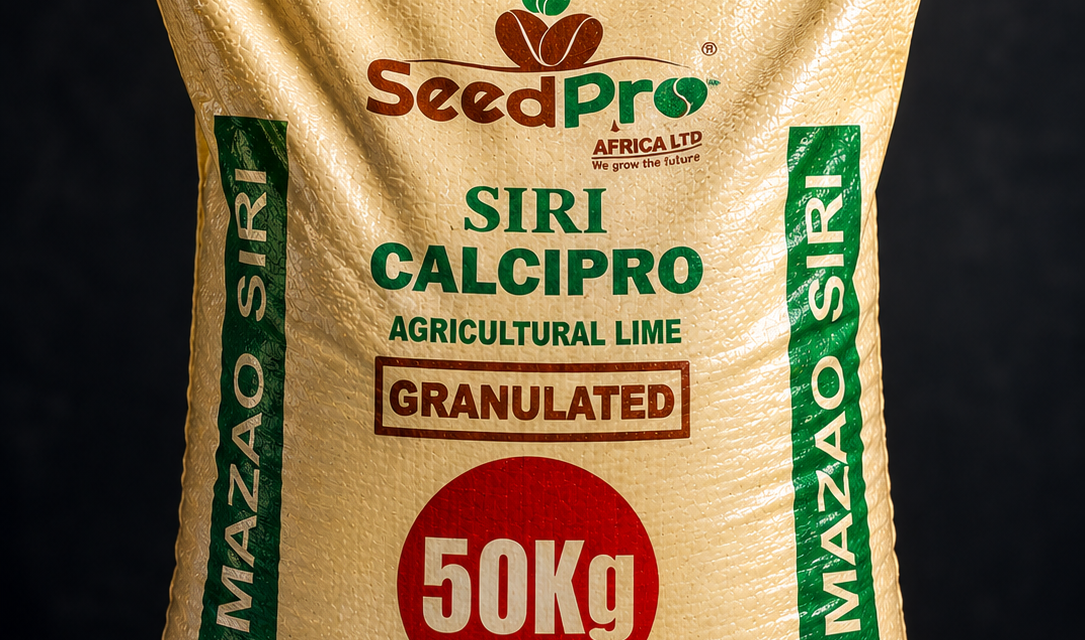
Granulated Agricultural Lime
Granulated lime is easy to spread and suitable for mechanized or small-scale farming.
At SeedPro Kenya, Granulated Agricultural Lime is designed for uniform application and faster field operations.
👉 Learn more: https://seedpro.co.ke/product/granulated-agricultural-lime/ (Replace with your exact product URL if different.)
Powdered Agricultural Lime
Powdered lime is commonly used for large-scale land preparation but requires careful handling during application.
When Should You Apply Lime?
The best time is:
- Before planting.
- During land preparation.
- At least two to four weeks before fertilizer application.
This allows enough time for the lime to react with the soil.
How Much Lime Should You Apply?
The amount depends on:
- Soil pH
- Soil type
- Crop to be grown
- Soil test recommendations
As a general guide, many Kenyan farms require between 1 and 4 tonnes per hectare, but always follow soil test recommendations.
How to Apply Agricultural Lime
Follow these simple steps:
- Conduct a soil test.
- Calculate the required lime rate.
- Spread the lime evenly across the field.
- Incorporate it into the topsoil during land preparation.
- Irrigate or wait for rainfall to activate the lime.
Avoid applying large amounts in one spot, as uneven application results in inconsistent soil correction.
Crops That Benefit from Liming
Correcting soil acidity benefits many crops, including:
- Maize
- Beans
- Coffee
- Tea
- Onions
- Tomatoes
- Potatoes
- Cabbages
- Sukuma Wiki (Collards)
- Spinach
- Avocados
- Bananas
If you’re growing onions, read our Complete Onion Farming Guide in Kenya. (Internal Link)
You may also like our Best Fertilizer for Sukuma Wiki in Kenya guide. (Internal Link)
Benefits of Correcting Soil Acidity
Applying agricultural lime can:
- Improve fertilizer efficiency.
- Increase crop yields.
- Promote stronger root systems.
- Improve soil structure.
- Enhance microbial activity.
- Increase calcium availability.
- Reduce aluminum toxicity.
- Improve water infiltration.
- Increase long-term soil productivity.
Common Mistakes Farmers Make
Many farmers reduce the effectiveness of liming by:
- Applying lime without conducting a soil test.
- Applying fertilizer immediately after liming.
- Using insufficient quantities.
- Failing to incorporate lime into the soil.
- Expecting instant results.
Liming is a long-term investment in soil health. Depending on the soil type and rainfall, benefits may continue for several years.
Choosing the Right Fertilizer After Liming
Once your soil pH has improved, crops respond much better to balanced fertilization.
SeedPro Kenya offers organo-mineral fertilizers that work effectively in healthy soils, including:
- DAP Plus for strong root establishment.
- Mazao Siri for vigorous vegetative growth.
- Siri Tunda for flowering and fruit development.
- Macro Pro foliar fertilizer for balanced crop nutrition.
Explore our complete fertilizer range:
https://seedpro.co.ke
Frequently Asked Questions
Can I apply lime and fertilizer on the same day?
It is generally recommended to allow at least two weeks between liming and applying certain fertilizers to maximize nutrient availability.
How often should I lime my farm?
Most farms require liming every three to five years, depending on rainfall, cropping intensity, and soil test results.
Does lime replace fertilizer?
No. Lime corrects soil pH but does not supply all the nutrients required by crops. Fertilizers are still necessary for balanced nutrition.
Can lime increase fertilizer efficiency?
Yes. Correcting soil acidity improves nutrient availability, allowing crops to utilize fertilizers more effectively.
Conclusion
Healthy soils are the foundation of profitable farming. If your crops are not responding to fertilizer as expected, soil acidity could be limiting their growth.
Applying agricultural lime based on a soil test can improve soil pH, unlock essential nutrients, and create better conditions for root development and beneficial soil organisms. When combined with balanced crop nutrition, liming helps farmers achieve healthier crops, higher yields, and better returns on investment.
Before your next planting season, consider testing your soil and correcting acidity where necessary. It is one of the most effective long-term investments you can make for your farm.
Related Articles
- Complete Onion Farming Guide in Kenya.
- Best Fertilizer for Sukuma Wiki in Kenya.
- How to Identify Nutrient Deficiencies in Crops.
- Best Fertilizer for Tomatoes in Kenya.
- Understanding NPK Ratios: What Every Farmer Should Know.
External Resources
- Kenya Agricultural and Livestock Research Organization (KALRO): https://www.kalro.org
- Kenya Plant Health Inspectorate Service (KEPHIS): https://www.kephis.org
- Ministry of Agriculture and Livestock Development: https://kilimo.go.ke