 21 September 2026
What Is an Organo-Mineral Fertilizer? And Why It’s the Future of Farming in Kenya
For years, Kenyan farmers have asked one important question: What is the best fertilizer in Kenya?
You will hear names such as DAP, CAN, Urea and NPK mentioned in almost every agrovet. But as farming changes, another type of fertilizer is gaining attention: organo-mineral fertilizer.
So, what exactly is an organo-mineral fertilizer, and why could it become an important part of the future of farming in Kenya?
Let’s break it down.
What Is an Organo-Mineral Fertilizer?
An organo-mineral fertilizer combines organic materials with mineral plant nutrients in one fertilizer.
The mineral component supplies nutrients such as nitrogen, phosphorus and potassium, while the organic component contributes organic matter and carbon containing materials that can support soil processes.
This is important because a productive farm needs more than nutrients alone.
A plant grows in soil, and the condition of that soil affects how efficiently the plant can access water and nutrients.
Instead of looking at fertilizer simply as something that feeds the plant, organo-mineral fertilizers encourage farmers to think about both the crop and the soil.
Why Are Kenyan Farmers Looking for Better Fertilizers?
Kenyan soils are not all the same.
A farmer in Nakuru may have different soil conditions from a farmer in Kakamega, Meru, Kirinyaga or Kajiado. Even two farms located next to each other can have different fertility levels depending on their cropping history and management.
This is why asking, “What is the best fertilizer in Kenya?” does not always have one answer.
The better question is:
What fertilizer does my crop and soil need at this particular stage?
A maize crop needs a different nutrition programme from cabbage, onions, potatoes, tomatoes or coffee. A young seedling also has different requirements from a flowering or fruiting crop.
Good fertilizer management therefore starts with understanding the crop, soil and growth stage.
Organo-Mineral Fertilizer vs Conventional Fertilizer
Mineral fertilizers are valuable because they provide concentrated plant nutrients.
For example, nitrogen supports vegetative growth, phosphorus is important for root development and energy transfer, while potassium plays important roles in water regulation and several plant processes.
Organic materials, on the other hand, can contribute organic matter and carbon to the soil.
An organo-mineral fertilizer brings these two approaches together.
The goal is not simply to add more fertilizer to the farm. The goal is to combine crop nutrition with soil fertility management.
This is one reason organo-mineral fertilizers are attracting increasing interest among farmers looking for more sustainable approaches to crop production.
Why Organic Matter Matters in Soil
Think of your soil as more than just the material holding your plants upright.
Healthy soil contains minerals, organic matter, air, water and a community of microorganisms.
Organic matter contributes to soil structure and provides carbon that supports biological processes in the soil.
When organic matter is poorly managed, the soil can become less favourable for root development and nutrient cycling.
This is where the organic component of an organo-mineral fertilizer becomes important.
It does not replace good farming practices such as adding suitable organic materials, managing soil acidity, maintaining moisture and using the correct fertilizer rate. Instead, it can form part of a broader soil fertility programme.
What About NPK?
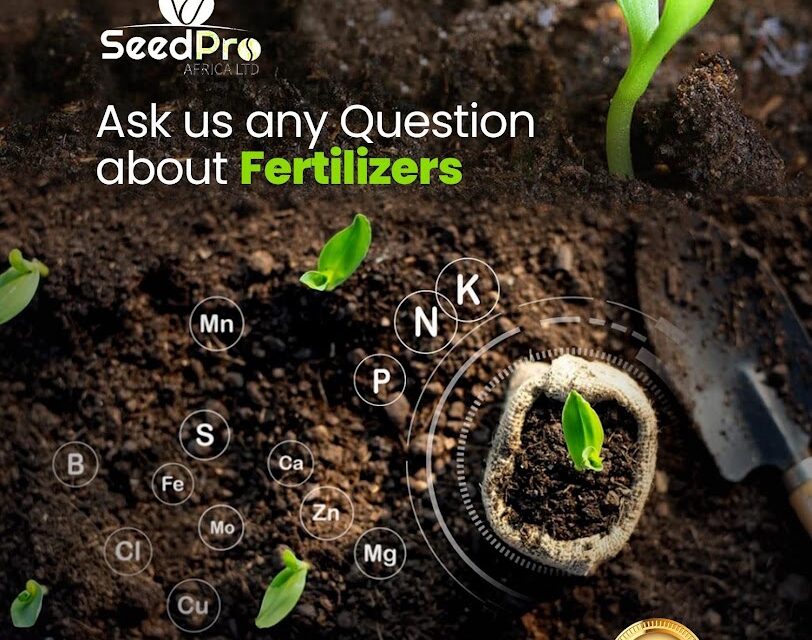
Farmers often search for NPK fertilizer in Kenya because nitrogen, phosphorus and potassium are three of the major nutrients required by crops.
But NPK is only part of the nutrition story.
Plants also require secondary nutrients and micronutrients, depending on the crop and soil.
Calcium, magnesium and sulphur, for example, all have important functions in plant growth.
Calcium supports cell wall development. Magnesium is central to chlorophyll and photosynthesis. Sulphur contributes to amino acid and protein formation.
This is why modern crop nutrition should look beyond simply asking how many kilograms of NPK are in a bag.
The question should be: Does my fertilizer programme provide the nutrients my crop actually needs?
SeedPro and Organo-Mineral Fertilizers
At SeedPro Kenya, our fertilizer approach is built around the connection between crop nutrition and soil health.
SeedPro develops organo-mineral fertilizers that combine mineral nutrients with organic components.
Our products are designed for different stages of crop growth.
For example, Siri Planta NPK 10:24:4 with CaO, MgO and S is a planting fertilizer designed to provide nutrients needed during crop establishment.
SeedPro also offers products such as DAP Plus, which combines mineral nutrients with an organo-mineral component and additional nutrients for planting programmes.
The idea is simple:
Feed the crop while taking the soil seriously.
From Waste to Value
The future of agriculture is not only about producing more food. It is also about how we use resources.
At SeedPro, agricultural materials such as avocado waste can form part of our approach to producing organo-mineral fertilizers.
This creates an opportunity to turn materials that might otherwise become waste into something useful for agriculture.
It connects fertilizer production with a wider conversation about circularity, soil health, farming and environmental responsibility.
For Kenyan agriculture, this matters.
Farmers need productive soils. Communities need useful agricultural solutions. And the environment needs better ways of managing resources.
Is Organo-Mineral Fertilizer the Best Fertilizer in Kenya?
Rather than saying one fertilizer is automatically the best for every Kenyan farmer, it is better to understand that the right fertilizer depends on the crop, soil, nutrient requirement and growth stage.
A fertilizer that works well for maize planting may not be the right choice for flowering tomatoes.
A fertilizer suitable for leafy vegetables may not be the same one required during potato tuber development.
The future of farming is therefore not simply about buying the strongest fertilizer.
It is about understanding your soil, understanding your crop and feeding it correctly.
The Future of Farming Starts With the Soil
Kenyan farmers are becoming more interested in productivity, soil health, efficient nutrient use and sustainable agriculture.
Organo-mineral fertilizers bring these conversations together by combining mineral plant nutrients with organic components.
That is why they deserve a place in the future of Kenyan agriculture.
Whether you are growing maize in Trans Nzoia, vegetables in Kiambu, potatoes in Nyandarua, coffee in Central Kenya or horticultural crops in Nakuru, remember one thing:
A good harvest starts with good nutrition, and good nutrition starts with understanding your soil.
At SeedPro Kenya, we believe the future of farming is not just about feeding the plant.
It is about feeding the plant while caring for the soil.
SeedPro Kenya. Ni Siri Ya Mazao.