 13 August 2026
Why Traditional DAP Plus Organo-Mineral Inputs are Changing Crop Establishment
The first few weeks of a crop can determine what happens later in the season.
A seed may germinate well. However, that does not always mean the crop will establish strongly.
Young plants need healthy roots, enough moisture and the right nutrients.
This is why crop establishment has become an important topic in modern farming.
Farmers are now looking beyond simply applying fertilizer. They are paying more attention to soil health, nutrient availability and how plants use nutrients.
One approach gaining attention is the use of organo-mineral fertilizers and soil inputs.
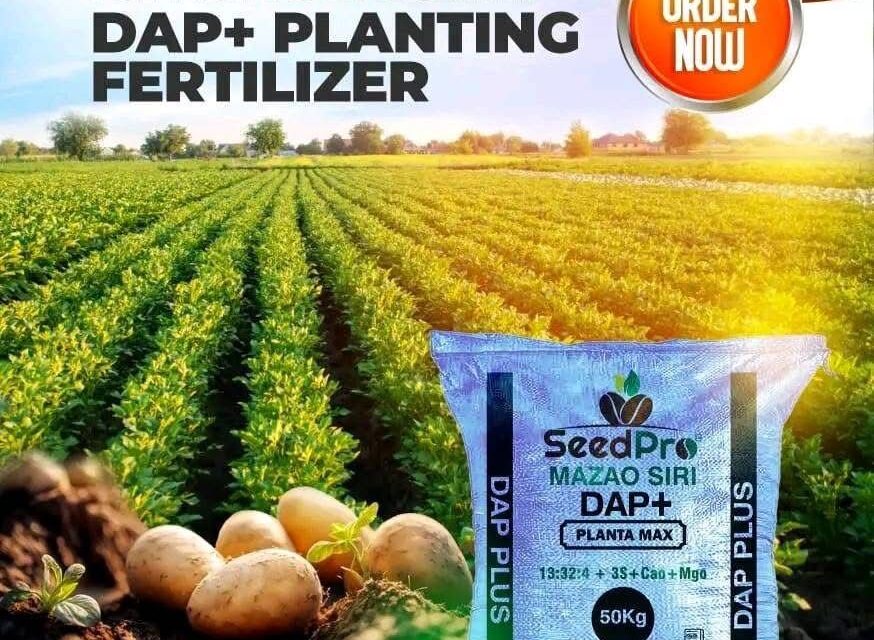
SeedPro DAP Plus is one example of a fertilizer that can form part of this approach.
But what makes organo-mineral inputs different?
And how can they help farmers achieve better crop establishment?
Let us look at the science and practical side of it.
What Is Crop Establishment?
Crop establishment is the period from germination until the young plant develops a strong root system and healthy shoots.
This stage is critical.
A well established crop has a better foundation for later growth.
During this period, the plant needs to:
- Develop new roots
- Produce leaves
- Access water
- Take up nutrients
- Build strong plant tissues
If the crop struggles during establishment, later management may not fully correct the problem.
That is why farmers should focus on the crop from the beginning.
Why Fertilizer at Planting Matters
A seed contains stored food.
This helps it germinate and produce its first roots and leaves.
However, the young plant soon begins depending more on nutrients in the soil.
This is where planting fertilizer can help.
A suitable fertilizer can supply nutrients close to the developing root zone.
Phosphorus is especially important during early root development.
Nitrogen also supports early vegetative growth.
Other nutrients may be needed depending on the crop and soil.
Therefore, the goal should not simply be to apply fertilizer.
The goal should be to provide the right nutrients at the right stage.
What Are Organo-Mineral Fertilizers?
Organo-mineral fertilizers combine mineral nutrient sources with an organic component.
This creates an approach that brings together two aspects of soil fertility management.
The mineral component supplies plant nutrients.
The organic component can contribute to the broader soil management strategy.
However, organo-mineral fertilizer should not be viewed as a magic solution.
The soil still needs proper moisture, good structure and balanced nutrients.
The farmer must also use the correct application rate.
Traditional Fertilizers Still Have a Role
It is important to understand that modern farming does not mean traditional mineral fertilizers have become useless.
Products such as DAP and NPK fertilizers remain important sources of plant nutrients.
The real question is how farmers can improve nutrient management.
Different soils have different needs.
For example, one farm may require more phosphorus. Another may need more potassium. A third may have soil acidity that limits nutrient availability.
Therefore, fertilizer decisions should be based on the crop and soil rather than simply copying what another farmer uses.
How DAP Plus Fits Into Crop Establishment
SeedPro DAP Plus can form part of a crop establishment program.
The aim of a planting fertilizer is to support the young crop when it begins developing its root system and above ground growth.
This is particularly important for crops such as:
- Maize
- Beans
- Wheat
- Potatoes
- Vegetables
- Other field and horticultural crops
However, the correct application rate depends on the crop, soil and product recommendations.
Always follow the product label.
Also, avoid placing concentrated fertilizer directly against the seed.
Correct placement matters.
Phosphorus and Early Root Growth
Why do farmers pay so much attention to phosphorus at planting?
The answer is roots.
Phosphorus plays an important role in energy transfer within plants.
It also supports root development and early plant growth.
A young crop with a well developed root system can explore more soil.
This can help the plant access water and nutrients.
However, phosphorus only works well when other factors are also favourable.
The soil needs adequate moisture.
The roots need oxygen.
The soil pH should also allow nutrients to remain available to the crop.
This is why fertilizer management should always be part of a wider soil management plan.
The Role of Organic Components
Organic matter plays an important role in soil health.
It can influence soil structure and moisture retention.
It also provides a source of carbon for soil organisms.
Healthy soils can create a better environment for developing roots.
This is one reason why organo-mineral fertilizers are attracting interest among farmers looking for more complete approaches to crop nutrition.
However, the amount and type of organic material matter.
A small organic component in a fertilizer does not replace good soil management.
Farmers should still use manure, compost, crop residues and other suitable practices where appropriate.
Better Establishment Starts With the Soil
You cannot separate crop establishment from soil health.
Imagine planting a high quality seed into compacted soil.
The seed may germinate.
But the roots may struggle to penetrate the soil.
Now imagine planting into a soil with poor moisture management.
The seedling may experience water stress.
Therefore, fertilizer is only one part of the equation.
Before planting, ask:
Is the soil well prepared?
Does it hold enough moisture?
Does it drain well?
Is the soil acidic?
Does it have enough nutrients?
These questions can help you make better fertilizer decisions.
Soil Testing Can Change Your Fertilizer Decisions
Many farmers apply fertilizer based on experience.
Experience is valuable.
However, soil testing gives you more information.
A soil test can help identify:
- Soil pH
- Available phosphorus
- Potassium levels
- Organic matter
- Other important soil properties
With this information, you can choose a fertilizer program that better matches your field.
You may discover that your soil does not need as much of one nutrient as you thought.
You may also discover a deficiency that was limiting your crop.
This can save money and improve nutrient management.
Fertilizer Alone Does Not Guarantee Good Establishment
This is an important point.
You can apply the right fertilizer and still have poor crop establishment.
Why?
Because plants need more than nutrients.
They also need:
- Moisture
- Oxygen
- Sunlight
- Good seed
- Suitable temperature
- Healthy roots
- Protection from pests
For example, a farmer may apply enough fertilizer but fail to provide enough water.
The crop can still struggle.
Therefore, successful establishment requires several factors to work together.
Correct Fertilizer Placement Matters
How you apply fertilizer can affect its performance.
Do not simply throw fertilizer randomly across the field and assume the crop will use all of it.
At planting, fertilizer should be placed using the recommended method for the product and crop.
Most importantly, keep concentrated fertilizer away from direct contact with the seed unless the product is specifically designed and recommended for that use.
Correct placement helps reduce the risk of seed injury.
It can also improve the opportunity for developing roots to access nutrients.
Moisture and Nutrient Uptake
Water plays a major role in nutrient uptake.
Plant roots take up nutrients from the soil solution.
Therefore, when the soil is extremely dry, nutrient movement and root activity can be affected.
On the other hand, excessive water can reduce oxygen in the root zone.
This can also affect root health.
For this reason, good moisture management is essential after applying fertilizer.
Rainfed farmers should pay close attention to planting conditions.
Irrigated farmers should avoid both overwatering and prolonged drought.
Why Early Root Growth Matters
Farmers often look at the leaves first.
However, much of the crop’s future performance starts underground.
Strong roots can help the plant:
- Explore more soil
- Access water
- Take up nutrients
- Anchor the plant
- Support later growth
A strong root system gives the plant a better foundation.
That is why planting nutrition should focus on more than making the crop look green.
Organo-Mineral Inputs and Modern Farming
Modern agriculture is becoming more focused on nutrient efficiency.
Farmers want to produce more while managing input costs.
They also want to maintain productive soils for future seasons.
Organo-mineral fertilizers fit into this conversation because they combine mineral nutrients with an organic component.
However, their success still depends on proper use.
The farmer must consider soil condition, crop requirements, moisture and application rate.
The product is only one part of the farming system.
DAP Plus and the Bigger Crop Nutrition Program
DAP Plus should not be viewed as the entire fertilizer program.
Crop nutrition continues after planting.
As the crop grows, its nutrient requirements change.
For example, maize may require additional nitrogen during vegetative growth.
Vegetables may require continued feeding because leaves are harvested regularly.
Beans have different nutrient requirements from maize.
Therefore, build your fertilizer program around the crop’s complete growth cycle.
From Planting to Harvest
Think of crop nutrition as a journey.
At planting, the crop needs support for establishment.
During vegetative growth, it needs nutrients for leaves and stems.
During reproductive growth, the nutrient demand changes again.
Finally, the crop needs to maintain healthy tissues while producing the final harvest.
This means fertilizer management should not stop after planting.
Instead, farmers should monitor the crop throughout the season.
How Farmers Can Improve Crop Establishment
Here are simple steps to improve your results.
1. Test the soil
Know what your soil contains before spending money on fertilizer.
2. Prepare the soil properly
Create a good environment for root development.
3. Use quality seed
Good seed gives you a stronger starting point.
4. Choose the right planting fertilizer
Match the fertilizer to the crop and soil.
5. Apply the correct rate
More fertilizer is not always better.
6. Place fertilizer correctly
Keep concentrated fertilizer away from direct seed contact.
7. Manage moisture
Provide enough water without creating waterlogging.
8. Monitor the crop
Look at both the roots and above ground growth.
9. Plan later nutrition
Remember that crop nutrition continues after establishment.
Common Mistakes During Crop Establishment
Applying fertilizer without testing the soil
This can lead to unnecessary spending.
It can also create nutrient imbalances.
Applying too much fertilizer
High fertilizer rates can increase costs.
They can also damage young plants when applied incorrectly.
Ignoring soil moisture
Nutrients need the right soil conditions to become available to plants.
Using poor quality seed
Fertilizer cannot fix poor genetic potential or damaged seed.
Placing fertilizer directly on the seed
Concentrated fertilizer can injure germinating seeds.
Stopping nutrition after planting
The crop continues to need nutrients as it grows.
The Future of Crop Establishment
The future of farming is not simply about applying more fertilizer.
It is about using inputs more intelligently.
Farmers need to understand their soil.
They need to understand their crops.
They also need to understand how nutrients, water and roots interact.
This is where modern organo-mineral inputs can play a role.
SeedPro DAP Plus provides farmers with an option for incorporating organo-mineral nutrition into their crop establishment strategy.
The goal is simple.
Give the crop a better start so it has a better chance of finishing strong.
Final Thoughts
Crop establishment is one of the most important stages of farming.
A strong crop begins with healthy soil, quality seed, enough moisture and suitable nutrition.
Traditional mineral fertilizers such as DAP and NPK remain important tools.
At the same time, organo-mineral fertilizers are giving farmers another option for managing crop nutrition.
SeedPro DAP Plus can form part of this modern approach.
However, no fertilizer should be used blindly.
Test your soil where possible.
Follow the recommended application rate.
Place fertilizer correctly.
Monitor your crop.
Then adjust your management based on what the crop and soil are telling you.
Better establishment today can mean a stronger crop tomorrow.
Frequently Asked Questions
What is an organo-mineral fertilizer?
An organo-mineral fertilizer combines mineral plant nutrients with an organic component.
It can form part of an integrated soil fertility and crop nutrition program.
Is DAP still good for crop establishment?
Yes.
DAP remains an important source of nitrogen and phosphorus for many crops.
However, the best fertilizer depends on soil fertility, crop requirements and local recommendations.
What is DAP Plus used for?
SeedPro DAP Plus can be used as part of a crop establishment and planting nutrition program.
Use it according to the recommended rate and application method on the product label.
Why is phosphorus important at planting?
Phosphorus plays an important role in plant energy transfer and early root development.
This makes it an important nutrient during crop establishment.
Can fertilizer damage seeds?
Yes.
Some concentrated fertilizers can damage germinating seeds when placed directly against them.
Always follow the recommended fertilizer placement method.
Is fertilizer enough for good crop establishment?
No.
Good establishment also requires quality seed, suitable soil, adequate moisture, good soil structure and protection from pests and diseases.
Should farmers test their soil before applying fertilizer?
Yes, where possible.
Soil testing can help farmers understand nutrient levels and soil pH.
This information can lead to better fertilizer decisions and potentially reduce unnecessary input costs.