 22 September 2026
Maize Farming in Kenya: Complete Guide From Planting to Harvest
Maize farming in Kenya is more than putting seed into the ground and waiting for rain.
Every decision matters.
The variety you choose, the condition of your soil, planting time, spacing, fertilizer, weed management, moisture and crop nutrition can all influence how your maize performs.
For a farmer asking how to grow maize in Kenya, how to increase maize yields, what fertilizer to use for maize, or how to plant maize correctly, this guide takes you through the crop from land preparation to harvest.
And there is one principle to remember throughout the season:
Do not feed maize the same way from planting to harvest. Feed the crop according to its growth stage.
1. Start With the Soil Before Planting Maize
Before buying fertilizer, understand your soil.
A soil test can show you important information about soil pH and nutrient levels and can help you make better fertilizer decisions.
This is important because there is no single fertilizer programme that is perfect for every maize farm in Kenya.
A farmer in acidic soil may have different requirements from a farmer in fertile soil. A rainfed farm may also require a different management approach from an irrigated farm.
Instead of asking only:
“Which fertilizer is best for maize?”
Ask:
“What does my soil need, and what will my maize need at each stage?”
That simple change in thinking can make fertilizer management much more effective.
2. Choose the Right Maize Variety
Your maize variety should match your farming environment.
Consider:
- Rainfall availability
- Altitude
- Maturity period
- Disease pressure
- Expected market
- Soil fertility
- Your target harvest period
Always purchase certified seed from a reliable supplier and follow the recommendations provided for that particular variety.
Good seed is the beginning, but good agronomy is what allows that seed to express its potential.
3. Prepare Your Land Properly
Good maize production starts before planting.
Prepare a suitable seedbed with good seed-to-soil contact while avoiding unnecessary damage to soil structure.
Remove problematic weeds and prepare the field early enough so that you are ready when the rains arrive.
For farmers practising conservation agriculture or other soil-friendly systems, land preparation should be adapted to the chosen system rather than following one method blindly.
The goal is simple:
Create an environment where maize roots can access water, air and nutrients.
4. When Should You Plant Maize in Kenya?
For rainfed maize, planting should generally coincide with the beginning of reliable rains so that the seed has enough moisture to germinate and establish.
However, “the first rain” does not always mean “plant immediately.”
Look at the moisture situation in the soil and the expected rainfall pattern.
Planting too early into insufficient moisture can result in poor germination.
Planting too late can expose the crop to moisture stress during important growth stages.
The ideal planting window therefore depends on your location and the seasonal rainfall pattern.
5. What Is the Correct Maize Spacing in Kenya?
Spacing determines the number of maize plants growing on your land.
A commonly used starting point for many maize systems is approximately:
75 cm between rows
and
25 to 30 cm between plants.
However, spacing should not be treated as a universal rule.
The recommended plant population depends on the maize variety, soil fertility, moisture availability and production system.
SeedPro’s maize spacing guide explains why spacing should be considered together with plant population, soil fertility and water availability.
Remember:
You are not simply spacing seeds. You are managing a population of plants.
Too many plants can create competition for water, nutrients and sunlight.
Too few plants can leave productive space unused.
6. How Deep Should Maize Seed Be Planted?
Planting depth depends on soil type and moisture, but maize is commonly planted around 3 to 5 cm deep.
Avoid placing seed excessively deep, especially in heavy soils.
The seed needs suitable moisture, oxygen and temperature conditions to germinate properly.
Uniform emergence is important because maize plants that emerge at very different times can compete unevenly within the same field.
7. Fertilizer for Maize at Planting
This is one of the biggest questions Kenyan maize farmers ask.
What fertilizer should I use when planting maize?
The answer depends on your soil and crop requirements.
Common planting fertilizers include DAP, NPK formulations and organo-mineral fertilizers.
SeedPro’s maize nutrition programme recommends DAP Plus or Siri Planta at planting, depending on the overall nutrition programme and soil conditions.
SeedPro DAP Plus
SeedPro DAP Plus is an organo-mineral planting fertilizer formulated as NPK 13:32:4 with sulphur, calcium and magnesium.
The relatively high phosphorus component makes it relevant to the establishment stage, when the young maize plant is developing its root system.
Nitrogen contributes to early growth, while the additional nutrients contribute to broader crop nutrition.
SeedPro Siri Planta
Siri Planta is another SeedPro planting fertilizer option, formulated as NPK 10:24:4 + CaO + MgO + S.
It can form part of a maize nutrition programme where its formulation is appropriate for the crop and soil conditions.
Important: DAP Plus and Siri Planta should not automatically be applied together simply because both are planting fertilizers. Choose the appropriate programme based on soil condition, crop requirements and agronomic recommendations.
8. Why Phosphorus Matters at Planting
When maize germinates, the developing plant needs to establish its root system.
Phosphorus has an important role in root development and energy transfer in plants.
This is why phosphorus-rich planting fertilizers are commonly used during crop establishment.
But there is an important point many farmers miss:
Phosphorus is not the only nutrient maize needs.
As the plant grows, its nutritional requirements change.
This is why a complete maize fertilizer programme cannot stop at planting.
9. Never Put Concentrated Fertilizer Directly Against the Seed
Fertilizer placement matters.
Concentrated fertilizer placed directly against seed can cause seed injury or poor establishment.
Instead, use the recommended placement method for the fertilizer you are applying and follow the product label.
Correct placement allows the young roots to access nutrients without exposing the seed unnecessarily.
SeedPro’s maize planting guidance also emphasizes correct fertilizer placement rather than putting fertilizer directly on the seed.
10. The First Few Weeks After Germination
Once your maize emerges, your job is not finished.
This is when you should begin monitoring the field closely.
Check:
- Plant population
- Germination uniformity
- Weed pressure
- Soil moisture
- Pest damage
- Leaf colour
- Crop growth
- Nutrient deficiency symptoms
Walk through the farm instead of only looking at the maize from the roadside.
Early problems are generally easier to address than problems discovered when the crop is already approaching maturity.
11. Control Weeds Early
Young maize plants compete poorly with established weeds.
Weeds can compete for:
- Water
- Nutrients
- Sunlight
- Space
Early weed management is therefore an important part of maize production.
Use the appropriate weed control method for your farm and follow product instructions carefully when using herbicides.
Do not wait until weeds have completely taken over the field.
12. Maize Needs More Nitrogen as It Grows
At planting, phosphorus is particularly important for establishment.
As maize enters vigorous vegetative growth, nitrogen becomes increasingly important.
Nitrogen supports leaf development and chlorophyll production, which is directly connected to photosynthesis.
This is why farmers should think beyond basal fertilizer.
SeedPro’s maize nutrition programme recommends additional nutrition as the crop develops rather than expecting one application at planting to feed the maize throughout the entire season.
13. Top Dressing Maize
Top dressing supplies additional nutrients after the crop has established.
Nitrogen is particularly important during the rapid vegetative growth stage.
The exact fertilizer, rate and timing should depend on the soil, fertilizer formulation, rainfall and crop condition.
SeedPro’s top dressing guide discusses applying nitrogen around the knee-height stage and highlights the importance of matching fertilizer application to crop development.
The important lesson is:
Do not wait until maize is severely yellow before planning your nitrogen programme.
Plan ahead.
14. Foliar Feeding in Maize
Foliar feeding can complement soil-applied fertilizers by supplying nutrients through the leaves.
However, foliar fertilizers should not automatically be treated as a replacement for a proper soil nutrition programme.
Think of foliar feeding as one part of the nutrition strategy.
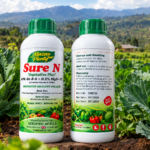
SeedPro’s maize programme recommends stage-specific nutrition, including foliar feeding during crop development.
Products should be selected according to the crop stage, nutrient requirement and agronomic recommendation.
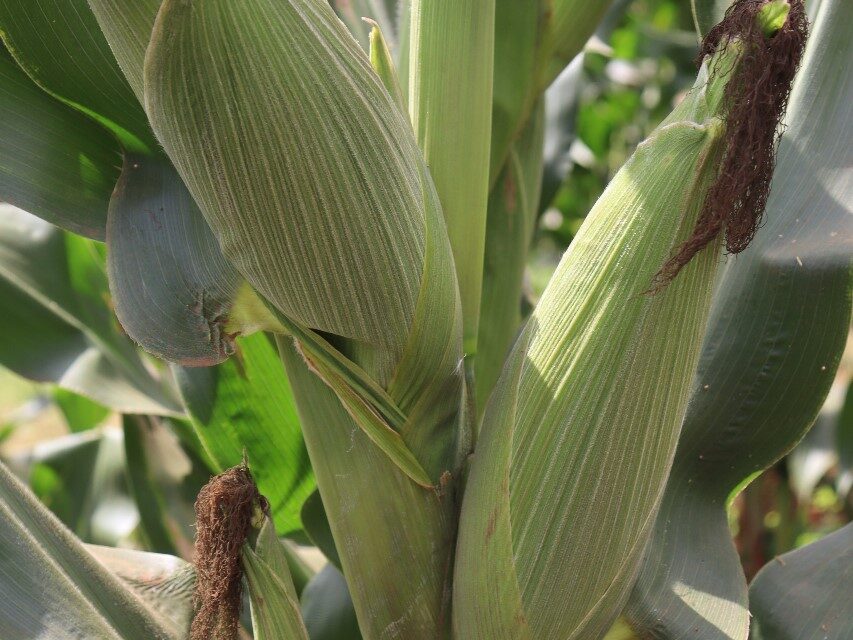
15. Tasseling, Silking and Pollination
As maize approaches tasseling and silking, the crop enters another critical stage.
Water and nutrient stress during this period can affect reproductive development.
Keep monitoring soil moisture and crop health.
Do not stop paying attention to the crop simply because the plants have become tall.
This is the stage when the crop is moving toward the part every farmer is waiting for:
the cob.
16. Grain Filling
After successful pollination, the maize plant begins filling the developing kernels.
At this point, the plant still needs adequate water and nutrients.
Healthy leaves are important because the crop depends heavily on photosynthesis to produce and supply carbohydrates needed for grain development.
Protect the crop from unnecessary stress and continue monitoring for pests, diseases and nutrient problems.
17. Harvesting Maize
Harvesting too early can increase drying requirements and storage challenges.
Leaving mature maize in the field for too long can expose it to pests, diseases, lodging and weather-related losses.
Harvest when the crop has reached appropriate maturity and follow proper drying and storage practices.
Remember that producing maize is only half the job.
Keeping the harvested maize safely is also part of farming.
18. Why SeedPro Uses an Organo-Mineral Approach
Traditional conversations about fertilizer often focus only on NPK.
But plants require many nutrients, while productive agriculture also depends on the condition of the soil.
This is where organo-mineral fertilizers come into the conversation.
SeedPro develops organo-mineral fertilizer formulations that combine organic components with mineral nutrients.
The approach considers both crop nutrition and soil fertility rather than looking at fertilizer purely as a source of individual nutrients.
For farmers, the goal is not simply:
“Give me the strongest fertilizer.”
The better question is:
“What nutrition programme can support my crop while taking care of the soil?”
19. A Simple Maize Nutrition Programme
For a farmer planning maize, think about the season in stages.
Stage 1: Before planting
Test the soil where possible.
Prepare the land.
Choose suitable certified seed.
Plan your fertilizer programme.
Stage 2: Planting
Plant at the recommended spacing and depth.
Use an appropriate planting fertilizer such as SeedPro DAP Plus or Siri Planta, depending on your soil and nutrition programme.
Stage 3: Early growth
Monitor emergence.
Control weeds.
Check for pests and nutrient problems.
Maintain adequate moisture.
Stage 4: Vegetative growth
The crop’s nitrogen requirement increases.
Plan top dressing and additional nutrition according to soil fertility and crop development.
Stage 5: Tasseling and reproductive growth
Monitor moisture, plant health and nutrition closely.
Avoid unnecessary crop stress.
Stage 6: Grain filling
Protect the crop until maturity.
Monitor pests, diseases and moisture.
Stage 7: Harvest
Harvest at the appropriate maturity stage.
Dry properly.
Store safely.
20. The Biggest Mistake in Maize Farming
Many farmers ask:
“Which fertilizer gives the highest maize yield?”
But that is not the complete question.
A better question is:
“What does my maize need at this particular stage?”
A fertilizer that is useful at planting may not be the fertilizer you need during rapid vegetative growth.
The nutrient requirements of the crop change.
The soil changes.
The weather changes.
The crop changes.
Therefore, your management should change too.
Why Kenyan Farmers Are Looking at SeedPro for Maize Nutrition
SeedPro Kenya is developing organo-mineral fertilizer solutions for farmers who want to manage both crop nutrition and soil fertility.
For maize farmers, the programme can begin with DAP Plus or Siri Planta at planting, followed by stage-specific nutrition as the crop develops.
SeedPro DAP Plus provides NPK 13:32:4 + sulphur + calcium + magnesium, while Siri Planta provides NPK 10:24:4 + CaO + MgO + S.
The right choice should depend on the crop, soil condition and overall fertilizer programme.
So before you plant your maize this season, don’t just buy fertilizer because your neighbour is using it.
Know your soil. Know your variety. Know your spacing. Know your crop stage. Then feed the crop accordingly.
That is how maize farming moves from guesswork to a planned production system.
Frequently Asked Questions About Maize Farming in Kenya
What is the best fertilizer for maize in Kenya?
There is no single fertilizer that is automatically best for every farm. Soil fertility, crop stage and nutrient requirements should guide fertilizer selection. SeedPro recommends DAP Plus or Siri Planta as planting options within its maize nutrition programme.
What is the best spacing for maize in Kenya?
A common spacing is around 75 cm between rows and 25 to 30 cm between plants, but the correct plant population depends on the variety, soil fertility, moisture and production system.
When should I apply fertilizer to maize?
Planting fertilizer is applied during establishment, while additional fertilizer may be required as the maize grows. Timing should depend on the fertilizer formulation, soil fertility and crop stage.
Can I use DAP Plus for maize?
Yes. SeedPro DAP Plus is formulated as an organo-mineral planting fertilizer and can form part of a maize nutrition programme. Follow the recommended application rate and placement instructions.
Is foliar fertilizer enough for maize?
No. Foliar fertilizer should generally complement, rather than replace, a properly planned soil nutrition programme.
How can I increase maize yields in Kenya?
Start with suitable certified seed, good land preparation, correct planting time, appropriate spacing, adequate moisture, early weed management, soil testing where possible and a crop nutrition programme that changes according to the growth stage.
Final Word
A good maize harvest does not begin when you see the first cob.
It begins before the seed is planted.
It begins with the soil.
It continues with the seed, spacing, moisture and planting fertilizer.
Then comes weed management, nitrogen, crop nutrition, moisture management, pollination and grain filling.
Every stage matters.
And every plant counts.
This maize planting season, don’t just plant maize. Plan your maize.
For SeedPro organo-mineral fertilizers and agricultural support, contact SeedPro Kenya on:
+254 119 098097
SeedPro Kenya
Ni Siri Ya Mazao.