 23 September 2026
Sure Calcia: Calcium and Mineral Feed Supplement for Cows, Goats, Sheep, Chicks and Layers in Kenya
Sure Calcia: A Calcium and Mineral Feed Supplement for Better Livestock Nutrition
Keeping productive animals is not only about giving them enough feed. Mineral nutrition is also an important part of livestock management, especially when animals are growing, producing milk, laying eggs, recovering from nutritional stress or experiencing periods of increased mineral demand.
Calcium is one of the minerals farmers should pay close attention to because it is closely associated with normal bone development, skeletal strength and eggshell formation. Phosphorus also has important roles in animal metabolism and skeletal development, while vitamin D3 is involved in calcium and phosphorus absorption and metabolism.
This is where Sure Calcia from SeedPro Africa comes in.
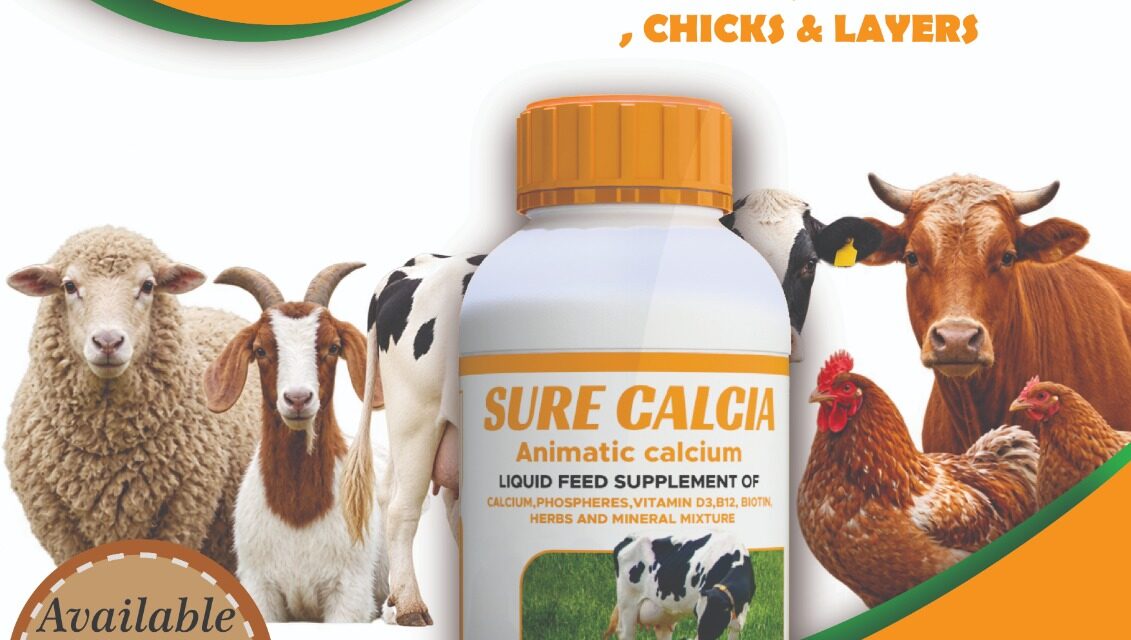
Sure Calcia is a liquid feed supplement formulated with calcium, phosphorus, vitamins and other nutritional components. According to the product information supplied by SeedPro, it is intended for cows, goats, sheep, chicks and layers.
For Kenyan farmers looking for a practical calcium supplement for livestock, Sure Calcia can form part of a properly managed animal nutrition programme.
What Is Sure Calcia?
Sure Calcia is a liquid animal feed supplement containing calcium, phosphorus, vitamins and mineral components.
The supplied product formulation lists calcium and phosphorus alongside vitamin A, vitamin D3, vitamin E, vitamin B12, zinc, copper and other ingredients.
The product label describes it as an “Animatic calcium” liquid feed supplement and highlights its use for cattle, sheep, goats, chicks and layers.
This combination is important because livestock nutrition is not simply about supplying one mineral in isolation. Animals require a balanced supply of nutrients according to their age, production stage, diet and physiological needs.
For example, vitamin D3 is important for the normal absorption and metabolism of calcium and phosphorus. In poultry, inadequate vitamin D3 can contribute to poor eggshell quality and skeletal problems even when calcium and phosphorus are present in the diet.
Why Is Calcium Important in Livestock?
Calcium is one of the major minerals required by animals.
It contributes to normal skeletal development and maintenance, while in laying birds a substantial amount of calcium is required for eggshell formation.
This becomes particularly important in productive animals.
A dairy cow producing milk, for example, has a significant calcium demand because calcium is secreted in milk. Around calving and the beginning of lactation, the demand can increase rapidly. Severe calcium deficiency around this period can result in hypocalcemia, commonly known as milk fever.
This is why farmers should not think of mineral supplementation only when an animal appears sick.
Good livestock management involves looking at the animal’s nutritional requirements before problems become severe.
FAO guidance also identifies calcium as an important mineral for dairy cattle and notes the relationship between calcium nutrition, animal condition and milk production.
Sure Calcia for Dairy Cows
Dairy farmers often concentrate on protein, energy and forage when planning feeding programmes, but minerals should not be forgotten.
A cow producing milk needs nutrients to support maintenance, growth where applicable and production.
Sure Calcia can be incorporated into a dairy nutrition programme as a calcium and mineral feed supplement, particularly where additional supplementation is recommended.
The product label indicates a daily dosage for cattle and large animals.
However, farmers should remember that supplementation does not replace good-quality forage, concentrates, clean drinking water or a balanced dairy ration.
Why calcium matters to dairy cows
Calcium has several important nutritional roles, including:
- Supporting normal bone development and maintenance
- Supporting calcium requirements associated with milk production
- Contributing to normal muscle and nerve function
- Supporting normal physiological processes
- Helping meet increased mineral requirements during demanding production stages
One of the most important periods for dairy farmers to understand is the transition around calving.
Milk fever is associated with a rapid fall in blood calcium around the onset of lactation. Severe cases can cause weakness, inability to stand and other serious signs.
Important: If a cow is down, unable to stand, severely weak or showing signs of suspected milk fever, this should be treated as a veterinary problem rather than simply relying on a feed supplement. Seek veterinary assistance promptly.
Sure Calcia for Goats and Sheep
Goat and sheep farmers also need to pay attention to mineral nutrition.
Growing animals require nutrients for normal skeletal development, while breeding and productive animals have their own nutritional demands.
The supplied Sure Calcia label provides a specific dosage for sheep and goats, making it suitable for incorporation into a managed supplementation programme.
Farmers should consider the animal’s:
- Age
- Breed
- Pregnancy status
- Lactation status
- Feed intake
- Production level
- Existing mineral supplementation
This is particularly important because adding several mineral products without understanding the total dietary intake can result in unnecessary or excessive supplementation.
The goal should always be balanced animal nutrition, not simply adding more of one nutrient.
Sure Calcia for Chicks and Poultry
Poultry farmers have another important reason to pay attention to calcium.
Calcium and phosphorus are critical nutrients in poultry diets, while vitamin D3 is important for their absorption and metabolism.
For growing chicks, adequate mineral nutrition supports normal skeletal development.
For layers, calcium demand becomes particularly important because eggshell formation requires substantial amounts of calcium.
Merck Veterinary Manual notes that inadequate calcium, phosphorus or vitamin D3 can result in skeletal problems, while calcium deficiency in laying hens can contribute to poor shell quality and depletion of bone calcium.
This is why poultry farmers asking questions such as:
“What causes weak eggshells in chickens?”
“What calcium supplement can I give my layers?”
“Why are my chickens producing thin-shelled eggs?”
should look beyond calcium alone and consider the complete mineral and nutritional programme.
Sure Calcia can be used as part of such a programme according to its product directions.
Calcium and Vitamin D3: Why the Combination Matters
One of the important nutrients included in Sure Calcia is vitamin D3.
Calcium does not work in isolation.
Vitamin D3 plays a major role in calcium and phosphorus absorption and metabolism. In poultry, vitamin D3 deficiency can lead to poor skeletal development in young birds and poor eggshell quality in laying hens.
This means that when farmers are thinking about calcium nutrition, they should also think about the animal’s overall mineral and vitamin balance.
A farmer may provide calcium but still experience nutritional problems if the overall diet is poorly balanced.
That is why supplementation should be considered as part of the complete feeding programme.
What Are the Benefits of Sure Calcia?
Based on the supplied product information, Sure Calcia is designed to support several areas of animal nutrition.
1. Supports calcium nutrition
The product supplies calcium as part of a liquid feed supplementation programme.
2. Supplies phosphorus
Phosphorus works alongside calcium in normal skeletal and metabolic functions.
3. Provides vitamin D3
Vitamin D3 is important in calcium and phosphorus metabolism.
4. Supports strong bones and growth
Adequate calcium and phosphorus are important for normal skeletal development, particularly in growing animals.
5. Supports poultry mineral nutrition
For chicks and layers, calcium and phosphorus are important components of a balanced nutritional programme.
6. Supports eggshell formation
Layers have high calcium requirements because calcium is used in eggshell formation. Poor calcium nutrition can contribute to poor shell quality.
7. Complements livestock feeding programmes
Sure Calcia can be used alongside good-quality feeds, forage and appropriate mineral management.
Sure Calcia Dosage and How to Use It
The supplied product label gives the following directions:
Cattle and large animals: 40 ml daily
Sheep and goats: 20 ml daily
Chicks: 20 ml per 100 lb
Layers: 50 ml per 100 lb
The label also gives an inclusion rate of 1 litre per 1,000 litres of drinking water.
Farmers should always follow the current product label and professional veterinary or animal nutrition advice, particularly where animals are pregnant, sick, producing heavily or already receiving other mineral supplements.
Do not increase the dosage simply because an animal appears weak. The cause of poor production or illness needs to be established.
When Should Farmers Consider Mineral Supplementation?
There is no single supplementation schedule that is suitable for every farm.
Mineral requirements can vary according to:
- Animal species
- Age
- Production level
- Pregnancy
- Lactation
- Feed quality
- Forage mineral content
- Soil and geographical conditions
- Existing mineral supplements
For dairy farmers, the period around calving deserves particular attention because calcium demand changes rapidly with the beginning of milk production.
For poultry farmers, the laying period is particularly important because calcium demand is closely connected to eggshell production.
Common Questions Farmers Ask About Calcium Supplements
What is the best calcium supplement for cows?
The appropriate calcium supplement depends on the cow’s diet, production stage and nutritional requirements. Sure Calcia is a liquid calcium and mineral feed supplement formulated for cattle and other livestock. It should be used according to its label directions and as part of a balanced feeding programme.
Can calcium supplements help dairy cows after calving?
Calcium requirements can increase significantly around calving and the beginning of lactation. Calcium supplementation may form part of a nutritional management programme, but severe cases of suspected milk fever require veterinary attention.
What does calcium do for chickens?
Calcium is particularly important in laying birds because it is required for eggshell formation. Calcium, phosphorus and vitamin D3 must be properly balanced for normal skeletal and eggshell development.
Can goats take calcium supplements?
Goats can require mineral supplementation depending on their diet, production stage and nutritional status. Sure Calcia’s supplied label includes a specific dosage for sheep and goats.
Why are my layers producing thin-shelled eggs?
Thin or poor-quality eggshells can have several causes, including problems involving calcium, phosphorus, vitamin D3 and overall diet. Other management and health factors may also contribute. A complete nutritional assessment is therefore important rather than assuming calcium alone is the problem.
Is calcium enough for good livestock nutrition?
No. Calcium is only one part of animal nutrition. Animals also require adequate energy, protein, vitamins, phosphorus, trace minerals, water and appropriate roughage or complete feeds.
Give Your Animals More Than Just Feed
Successful livestock farming is about more than filling a feeding trough.
The quality and balance of the nutrients an animal receives can influence growth, production, reproduction and general performance. Minerals such as calcium and phosphorus are part of that equation.
Sure Calcia provides a convenient liquid source of calcium and other nutritional components for cattle, goats, sheep, chicks and layers.
For farmers in Kenya looking to strengthen their livestock nutrition programme, it can be considered alongside good feeding, clean water, proper housing, disease prevention and regular veterinary and nutritional assessment.
SeedPro Africa also provides a range of livestock supplements and feed additives for different animal production needs.
You can explore SeedPro’s Animal Supplements & Feed Additives range for additional livestock nutrition solutions.
For farmers who also grow crops, SeedPro’s crop nutrition programmes cover different stages of crop production. You can explore the SeedPro foliar fertilizer range and learn more about foliar feeding for crops.
Final Thoughts
Sure Calcia calcium supplement for livestock is designed to help farmers provide additional calcium, phosphorus and vitamin nutrition to cattle, goats, sheep, chicks and layers.
Calcium is especially important in high-demand situations such as milk production and egg formation, while vitamin D3 plays an important role in calcium and phosphorus metabolism.
The key message for farmers is simple: do not look at livestock nutrition as feed alone. Think about the complete nutritional picture.
Good forage, balanced feeds, adequate water, appropriate mineral supplementation and proper animal management all work together.
For serious production problems such as a cow unable to stand after calving, persistent weakness, severe appetite loss or widespread problems in a poultry flock, farmers should involve a qualified veterinarian or animal nutrition professional rather than relying on supplementation alone.