 24 September 2026
Onion Farming in Kenya: Preventing Bulb Rot and Increasing Bulb Size with Balanced Nutrition
Introduction: Why Onion Farming in Kenya Can Be Highly Rewarding
Onion farming in Kenya is attracting more farmers because bulb onions have a ready market in many parts of the country. From open air markets and mama mbogas to supermarkets, hotels, restaurants and food processors, onions are used almost every day.
But there is a big difference between simply growing onions and producing large, firm, healthy bulbs that store well and attract buyers.
Many farmers ask questions such as:
Why are my onion bulbs small?
Why are my onions rotting in the field?
What is the best fertilizer for onions in Kenya?
When should I apply fertilizer to onions?
How can I increase onion bulb size?
How often should onions be irrigated?
The answer is not one fertilizer or one practice. Successful onion production requires the right combination of quality planting material, soil fertility, balanced nutrition, water management, spacing, disease management and proper harvesting and curing.
SeedPro already has a detailed guide on complete onion farming in Kenya covering planting, spacing, irrigation, nutrition and harvesting. This article goes deeper into one of the biggest challenges farmers face: how to prevent bulb problems while supporting proper bulb development and size.
Start with the Soil Before Planting Onions
Onions have a relatively shallow root system, meaning the crop depends heavily on the conditions around the root zone.
The soil should be fertile, loose and well drained. Waterlogged soils are particularly dangerous because excessive moisture around the roots can encourage root and bulb problems.
Before planting, farmers should therefore think beyond simply asking, “Which fertilizer should I buy?”
Ask instead:
What does my soil need?
A soil test can help identify deficiencies and guide fertilizer application more accurately.
Farmers should also pay attention to soil structure and drainage. A field that holds excessive water can create problems even when the fertilizer programme is good.
Good onion farming starts below the ground.
DAP Plus: Give the Onion Crop a Strong Start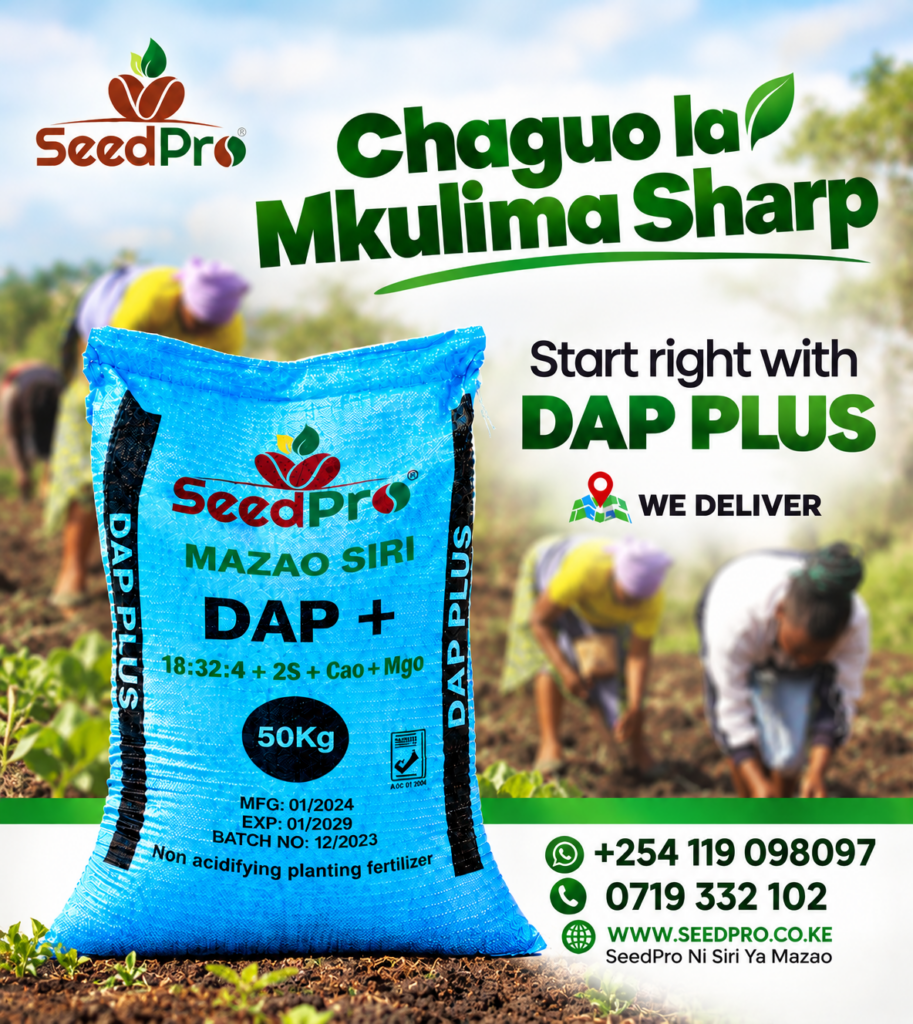
The foundation of a good onion crop begins at establishment.
Young onion plants need a healthy root system so they can efficiently access water and nutrients later when the crop begins building the bulb.
This is where SeedPro DAP Plus can be incorporated into an onion nutrition programme as a planting fertilizer.
SeedPro’s DAP Plus is formulated as an organo-mineral fertilizer containing NPK together with calcium and magnesium. The phosphorus component supports early root development and establishment, while the other nutrients contribute to balanced early crop development.
For farmers who want to understand more about how DAP Plus fits into crop establishment, SeedPro also has a dedicated DAP Plus fertilizer resource, which can be linked directly to the relevant product page once the website product URL is confirmed.
A strong root system gives the crop a better foundation for the vegetative growth that comes before serious bulb enlargement.
However, farmers should avoid the common mistake of thinking that more fertilizer automatically means bigger onions.
Onion bulb size is built through balanced nutrition and good crop management, not excessive application of one nutrient.
Sure P: Supporting Root Development and Crop Establishment
As onions establish, phosphorus remains important for energy transfer and root development.
SeedPro Sure P can be incorporated into the crop nutrition programme where additional phosphorus support is appropriate.
The goal is not simply to push phosphorus into the soil. The goal is to maintain a healthy root environment that allows the onion plant to continue taking up nutrients and water efficiently.
Farmers should always follow the product label and recommended application rates, preferably alongside soil and crop assessment.
Don’t Overfeed Nitrogen if You Want Good Bulbs
Nitrogen is important in onion production because it supports leaf growth and chlorophyll formation.
The leaves are the crop’s food producing factory. They capture light and use photosynthesis to manufacture carbohydrates that eventually contribute to bulb development.
But there is a catch.
More nitrogen does not automatically mean bigger onions.
Excessive nitrogen can encourage excessive vegetative growth and thick necks, while late nitrogen applications can interfere with proper maturity and storage quality.
This is why farmers need to understand the crop stage rather than applying fertilizer blindly.
The goal is to build a healthy canopy early enough for the plant to manufacture food, then manage nutrition appropriately as the crop transitions towards bulb formation.
Sure N: Build the Leaf Factory Before Bulbing
SeedPro Sure N High Nitrogen can play a role during the vegetative stage when the onion crop needs strong leaf development.
Healthy leaves are important because they are responsible for photosynthesis.
Think about the onion plant this way:
Healthy leaves → effective photosynthesis → production of carbohydrates → movement and storage of energy → bulb development.
The objective is therefore to build enough healthy foliage early, then transition the crop towards bulb formation rather than continuing to push excessive vegetative growth.
This is one reason timing matters so much in onion farming.
Farmers looking for more information about onion nutrition can also read SeedPro’s guide, Onions Require Which Nutrients? A Practical Feeding Guide for High Yields. It explains the roles of phosphorus, nitrogen, calcium, magnesium, micronutrients and biostimulants in onion production.
Macro Pro: Supporting Bulb Development
Once the crop moves towards bulb development, nutrition needs change.
This is where SeedPro Macro Pro can be included in the onion programme to support the crop during the stages when the farmer is focused on bulb expansion.
Macro Pro is a balanced foliar fertilizer containing NPK, magnesium, trace elements and plant growth regulators. SeedPro lists it for vegetables and other crops requiring supplementary foliar nutrition.
Large bulbs are not produced overnight. The plant must first establish roots and leaves before it can effectively channel resources towards bulb enlargement.
Farmers should therefore avoid judging their crop too early.
A small onion plant today does not necessarily mean a small harvest later.
What matters is whether the crop has healthy roots, sufficient foliage, adequate moisture and balanced nutrition as it moves through the bulb formation and enlargement stages.
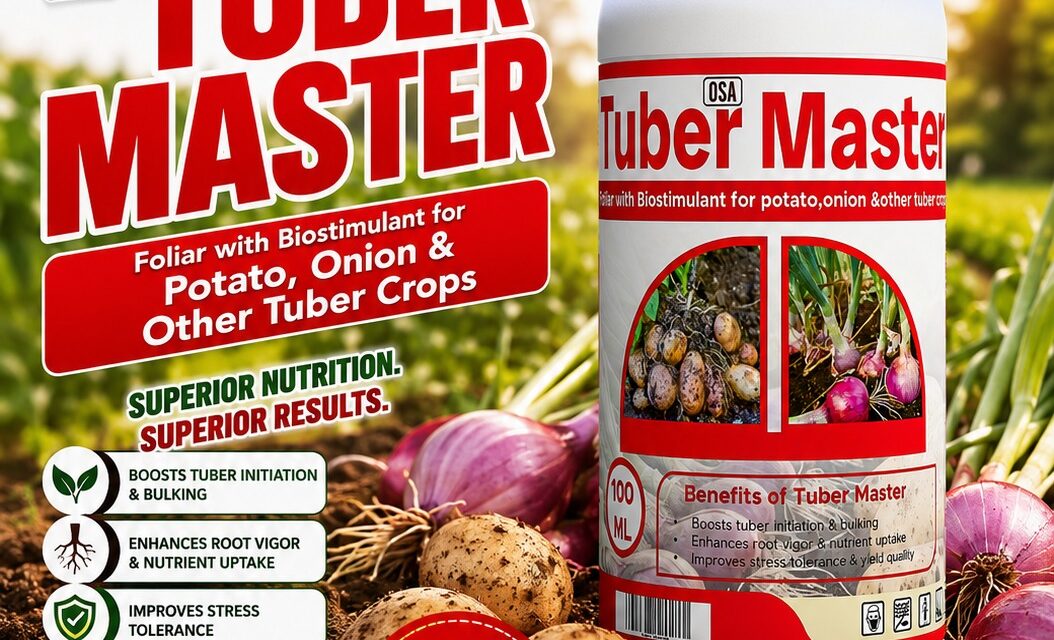
Tubermaster: Supporting Onion Bulb Development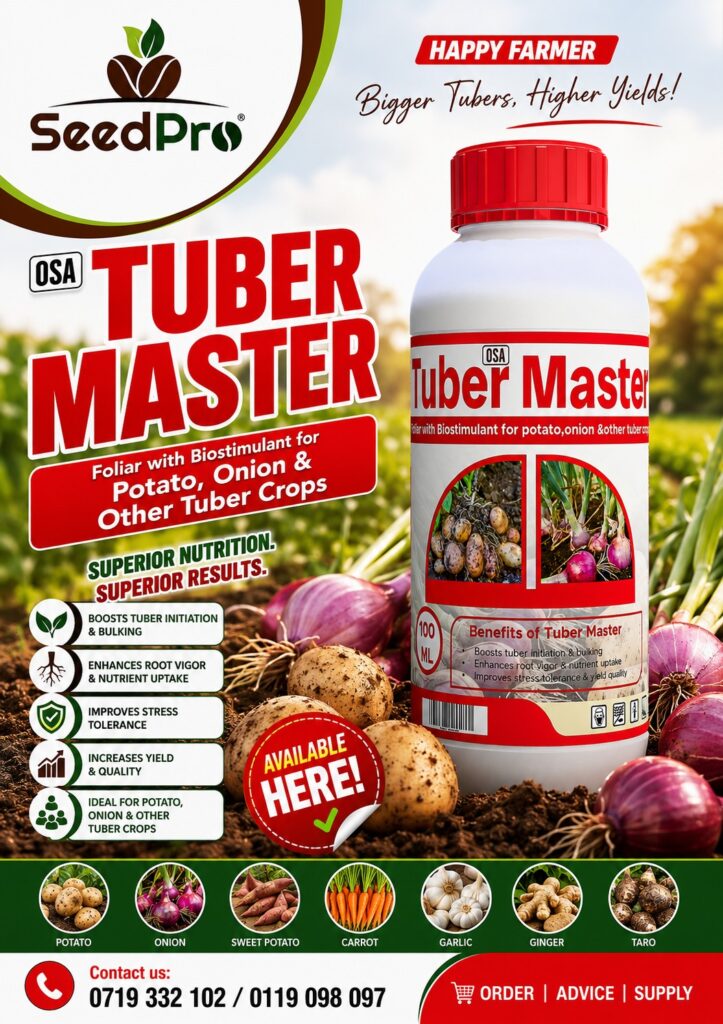
The name Tubermaster may make some farmers associate the product mainly with potatoes, but SeedPro also positions Tuber Master for onions and other underground storage crops.
SeedPro’s Best Foliar Fertilizer for Potatoes and Onions in Kenya explains how Tuber Master can be incorporated into nutrition programmes for onions, potatoes, sweet potatoes, carrots, garlic, ginger and other crops.
For onion farmers, the focus is on supporting the crop during the stages when the bulb is developing.
Tuber Master contains biostimulant components intended to support root development, nutrient utilization and underground crop development.
The application should always follow the manufacturer’s recommended rate and crop timing.
Remember that no biostimulant can compensate for poor soil fertility, inadequate water or damaged roots.
It works best as part of a complete crop management programme.
Sure K: Supporting Bulb Filling and Crop Quality
Potassium becomes particularly important when the crop is moving into bulb development and quality formation.
SeedPro Sure K High Potassium can be included in the nutrition programme during the appropriate crop stage to support the crop’s potassium requirements.
SeedPro’s current foliar fertilizer information lists Sure K with an NPK formulation of 10-9-47 plus magnesium, making it a high-potassium option for crops requiring additional potassium nutrition.
Potassium plays important roles in plant water regulation, enzyme activity and the movement of photosynthetic products within the plant.
For the onion farmer, this matters because the objective is not simply to grow a lot of leaves.
The goal is to produce firm, well developed bulbs with good marketable quality.
Again, the correct timing and rate are more important than simply applying more fertilizer.
Why Are Onion Bulbs Small?
Small bulbs can result from several factors.
These include:
- Poor variety selection
- Overcrowding
- Poor soil fertility
- Poor root development
- Inadequate irrigation
- Water stress during bulb development
- Excessive heat
- Poor weed management
- Disease pressure
- Imbalanced fertilizer application
- Applying too much nitrogen at the wrong stage
SeedPro’s Onion Farming Guide for Maximum Bulb Size also discusses soil preparation, irrigation, spacing and nutrition as important factors in achieving better bulb development.
This shows why onion production cannot be reduced to fertilizer alone.
A farmer may have excellent fertilizer but still harvest small bulbs if the crop experiences prolonged water stress, overcrowding, poor drainage or serious disease pressure.
Onion Irrigation: Avoid Both Drought and Waterlogging
Water management is one of the most important parts of onion farming in Kenya.
Onions need adequate moisture during growth, particularly during bulb development, but excessive water can create problems.
The objective should therefore be consistent moisture without keeping the field saturated.
Drip irrigation can be particularly useful because it allows farmers to deliver water more precisely to the root zone while avoiding unnecessary wetting of the entire field.
SeedPro’s Complete Onion Farming Guide in Kenya also discusses irrigation, including the importance of maintaining moisture while avoiding waterlogging.
This is especially important on heavy soils or poorly drained fields.
A field that remains excessively wet creates an environment where root and bulb problems can become more difficult to manage.
How to Prevent Onion Bulb Rot
Bulb rot can destroy the value of an otherwise promising onion crop.
Prevention begins in the field.
Farmers should:
- Use healthy planting material.
- Maintain appropriate spacing to improve airflow.
- Avoid excessive irrigation.
- Ensure the field has good drainage.
- Avoid unnecessary injury to bulbs.
- Remove visibly rotten bulbs from the field.
- Avoid excessive nitrogen, particularly late in the crop.
- Harvest at the correct maturity.
- Cure onions properly after harvesting.
- Store only properly cured, healthy bulbs.
The Kenya Ministry of Agriculture onion disease management guidance recommends appropriate nutrition and spacing and provides guidance on curing and disease management.
The important lesson is that bulb rot is not something farmers should try to solve only after the onions have already started rotting.
Good drainage, careful irrigation, healthy planting material, proper spacing, crop hygiene and correct harvesting and curing all form part of prevention.
Harvesting at the Right Time Matters
You can grow beautiful onions and still lose money through poor harvesting and curing.
Bulb maturity should be considered before harvesting. As onions mature, the tops naturally begin to fall over and dry, while the neck becomes tighter and the bulb develops its protective outer layers.
Do not rush harvesting simply because the bulbs look large.
And do not leave mature onions in the field indefinitely.
Harvesting during wet conditions can increase the risk of rotting, while poor timing can affect storage quality.
For more information, farmers can also refer to the Ministry of Agriculture onion production and disease management manual, which provides guidance on maturity, curing and disease management.
Curing: The Step Many Farmers Underestimate
Curing is not just about drying onions.
It is an important part of preparing the bulbs for storage.
Proper curing allows the neck and outer layers to dry, helping protect the bulb and improve shelf life.
The Ministry of Agriculture recommends curing onions in a warm, dry and well ventilated environment protected from direct sunlight and rain.
This means that after investing in seed, fertilizer, labour, irrigation and pest management, farmers should not destroy the value of the crop through poor post harvest handling.
A good harvest is not finished when the onions are removed from the soil.
It is finished when the farmer has healthy, properly cured bulbs that can reach the market in good condition.
A Balanced SeedPro Onion Nutrition Programme
A practical SeedPro onion programme can be structured around crop development rather than simply applying fertilizer whenever the crop looks weak.
At Planting
Use SeedPro DAP Plus as part of the basal nutrition programme to support establishment and root development.
During Early Establishment
Use Sure P where additional phosphorus support is appropriate based on the crop and soil requirements.
Vegetative Stage
Use Sure N High Nitrogen to support healthy leaf development when the crop requires additional nitrogen.
Transition Towards Bulb Development
Move away from excessive nitrogen and focus on balanced nutrition.
Bulb Development and Enlargement
Use Macro Pro as part of the crop nutrition programme and incorporate Tubermaster where appropriate to support underground bulb development.
Bulb Filling and Quality
Use Sure K High Potassium at the appropriate crop stage to support potassium nutrition.
This stage-based approach is more useful than telling farmers to apply every product at once.
The exact rate and timing should always follow SeedPro’s product recommendations and, where possible, be adjusted according to soil test results, variety, irrigation method and crop condition.
The Real Secret to Bigger Onions
If you want bigger onions, don’t ask only:
“Which fertilizer makes onions big?”
Ask:
“What does the onion plant need at each stage of its development?”
That change in thinking can completely transform the way you farm.
A good onion crop needs a strong beginning, healthy roots, productive leaves, balanced nutrition, adequate moisture, good drainage, proper spacing and careful management as the bulb develops.
SeedPro’s organo-mineral fertilizer range and foliar nutrition products can form part of this complete nutrition strategy, from DAP Plus and Sure P during establishment, Sure N during vegetative development, to Macro Pro, Tubermaster and Sure K during the stages leading towards bulb development and quality.
The objective is not simply to feed the plant.
It is to feed the crop according to what it is trying to accomplish at that particular stage.
And when nutrition, water and crop management work together, the farmer gives the onion a much better opportunity to produce the large, firm and marketable bulbs that buyers are looking for.
Final Word for Kenyan Onion Farmers
Onion farming in Kenya can be rewarding, but profitability starts with good agronomy.
Do not wait until your onions are already struggling to think about nutrition.
Prepare the soil.
Start the crop strongly.
Build healthy foliage.
Manage water carefully.
Avoid excessive nitrogen.
Support bulb development with balanced nutrition.
Protect the crop from disease.
Harvest at maturity.
And cure the bulbs properly.
Because the size of your onion harvest is not determined by one fertilizer application.
It is the result of every decision you make from the nursery to the store.
For farmers looking for a complete onion nutrition programme, talk to SeedPro about the right combination of DAP Plus, Sure P, Sure N, Macro Pro, Tubermaster and Sure K for your crop and farming conditions.
Explore more SeedPro onion resources, including the Complete Onion Farming Guide in Kenya, Onions Require Which Nutrients? and Best Foliar Fertilizer for Potatoes and Onions in Kenya.
SeedPro: Ni Siri Ya Mazao.