 29 August 2026
The Secret to Heavy Irish Potatoes: How to Double Tuber Sizes in Kenya
You planted good potato seed.
The crop emerged beautifully.
The leaves are green and healthy.
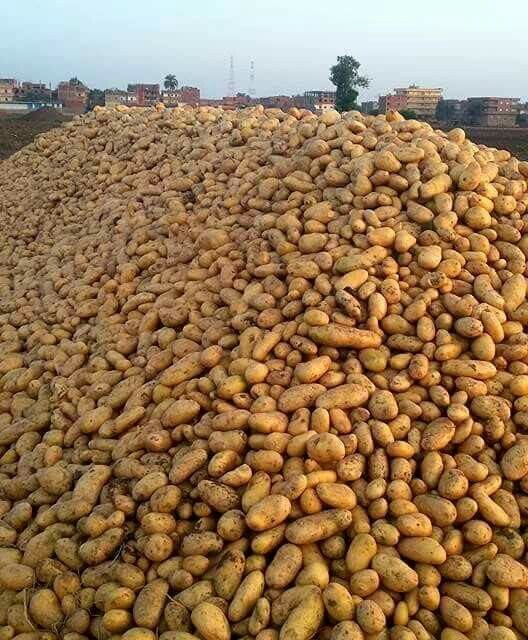
But when you harvest, you discover something frustrating: many small tubers instead of the big, heavy potatoes buyers want.
Sound familiar?
For many Kenyan potato farmers, the problem is not simply the variety they planted. It is often what happens between planting, tuber initiation and bulking.
If your goal is to produce larger, heavier and more marketable Irish potatoes, you need to understand one important principle:
Big potato tubers are built by the crop, but the farmer creates the conditions that allow them to bulk.
This means paying attention to seed quality, soil fertility, water management, plant health and nutrition at every stage.
And when used correctly as part of a complete crop nutrition programme, products such as DAP Plus, Macro Pro and Tubermaster can help support the crop through these critical stages.
Why Are Your Potatoes Producing Small Tubers?
Before looking at fertilizers, let us deal with the real problem.
Potato tuber size can be affected by several factors, including:
- Poor quality or unsuitable seed
- Incorrect plant spacing
- Low soil fertility
- Poor phosphorus availability during establishment
- Nutrient deficiencies during tuber formation and bulking
- Irregular moisture supply
- Excessive nitrogen
- Pest and disease pressure
- Poor soil structure
- Harvesting too early
KALRO notes that low potato productivity in Kenya is influenced by farmer practices involving seed, fertilizers, pesticides and crop rotation, while irrigation can also play an important role where water is available.
So, there is no magic fertilizer that can turn every small potato into a giant tuber overnight.
The secret is getting several things right at the same time.
1. Start With Quality Potato Seed
You cannot build a high-yielding potato crop from poor planting material.
Quality certified seed gives you a much better foundation for uniform emergence, vigorous growth and good tuber production.
Choose a variety suitable for your market and production area, and purchase seed from a reliable source.
Remember:
The bigger the harvest you want, the more seriously you should take the seed you plant.
KALRO has invested heavily in potato breeding and the production of disease-free planting material, including minitubers and rooted apical cuttings.
2. Give the Crop a Strong Start With DAP Plus
The first few weeks of potato growth are extremely important.
The plant needs to establish a strong root system and develop enough vegetative growth to support later tuber development.
This is where DAP Plus comes into the programme.
DAP Plus can be used at planting as part of the basal fertilizer programme, supplying phosphorus that supports early root establishment.
Strong roots mean the crop has a better foundation for absorbing water and nutrients later in the season.
But remember:
Do not think of fertilizer as simply “food for the potato.”
Think of it as part of a complete system involving soil fertility, moisture, roots, leaves and tubers.
SeedPro’s potato production guide also places DAP Plus at the planting stage to support root establishment.
For more information on improving crop establishment, read our guide on organo-mineral fertilizers and crop establishment.
3. Do Not Confuse Green Leaves With Big Potatoes
This is where many farmers make a mistake.
You see a potato crop with beautiful dark green leaves and assume the crop is performing perfectly.
But the real question is:
What is happening underneath the soil?
Potatoes need sufficient leaf area to produce carbohydrates through photosynthesis. Those carbohydrates are eventually transferred towards the developing tubers.
However, excessive nitrogen can encourage too much vegetative growth and delay or interfere with the balance between foliage development and tuber production.
Research reviewed through FAO’s AGRIS database also shows that nitrogen and potassium management can strongly influence potato yield and tuber size.
So the goal is not simply to produce the greenest potato field.
The goal is to produce a healthy canopy that efficiently feeds the tubers.
4. Tuber Initiation Is the Turning Point
This is the stage where the crop starts changing the game.
After sufficient vegetative development, the potato plant begins initiating tubers.
From this point onwards, your management decisions can have a major effect on the final harvest.
You want:
Healthy roots + healthy leaves + adequate moisture + balanced nutrition = better tuber development.
Do not wait until the potatoes are already mature before thinking about tuber size.
By then, much of the opportunity has already passed.
5. Bring in Macro Pro During Active Crop Development
Macro Pro is a foliar fertilizer containing balanced NPK, magnesium, trace elements and plant growth regulators. SeedPro describes it as a complete foliar feed designed to provide fast-acting nutrition and stage-based crop support.
For potatoes, foliar feeding can complement the main soil fertility programme.
Why?
Because the plant does not depend entirely on what you put into the soil at planting.
As the crop grows, its nutritional requirements change.
Macro Pro can therefore be incorporated into a crop nutrition programme during active growth when the crop needs additional nutritional support.
The important point is this:
Foliar feeding should complement good soil nutrition, not replace it.
Read our detailed guide on foliar feeding for crops to understand how foliar nutrition fits into a crop management programme.
6. The Big Opportunity: Tuber Bulking
Now we reach the stage every potato farmer is waiting for.
Tuber bulking.
This is when the existing tubers increase significantly in weight and size.
A field can have many tubers but still produce poor returns if most of them remain small.
The objective is therefore not simply:
“How many potatoes are under the plant?”
It is:
“How many of those potatoes will reach a profitable marketable size?”
Potassium is particularly important in potato production because it is associated with tuber yield and bulking. Research has found that potassium management can increase large and medium tuber yields while reducing the proportion of small tubers.
This is where Tubermaster becomes particularly relevant.
7. Use Tubermaster to Support Tuber Bulking
Tubermaster is a SeedPro foliar fertilizer with biostimulant support designed for tuber and root crops.
It is formulated to support:
• Tuber initiation
• Tuber bulking
• Better tuber development
• More uniform sizing
• Improved market quality
The purpose is not to promise that every potato will become enormous.
Instead, Tubermaster should be used as part of a well-managed programme designed to help the crop make better use of available nutrients and support tuber development.
SeedPro’s potato and onion foliar fertilizer guide specifically positions Tubermaster around tuber initiation and bulking.
For farmers asking, “What can I do to increase potato tuber size?”, this is one of the stages that deserves serious attention.
8. Water Can Make or Break Tuber Size
Here is a mistake that can completely undermine your fertilizer programme:
Irregular watering.
A potato crop cannot efficiently bulk tubers when it repeatedly moves between severe moisture stress and excessive moisture.
During tuber development, the crop needs adequate and reasonably consistent moisture.
This does not mean flooding the field.
In fact, excessive irrigation can create its own problems. A recent review of potato irrigation and nitrogen management found that excessive irrigation and nitrogen can negatively affect tuber yield and quality, while appropriate irrigation management can improve resource-use efficiency.
If you have irrigation, use it strategically.
If you rely on rainfall, conserve soil moisture and monitor the crop carefully during dry periods.
And most importantly:
Good fertilizer + poor water management = disappointing results.
9. Do Not Ignore Soil Health
Your fertilizer is only as effective as the environment in which the roots are growing.
Compacted soils can restrict roots.
Poor drainage can suffocate roots.
Low organic matter can affect soil structure and nutrient availability.
That is why potato production should not be reduced to NPK alone.
Think about:
Soil structure
Organic matter
Drainage
pH
Root development
Nutrient availability
Moisture management
A healthy root zone gives your crop a much better chance of reaching its yield potential.
10. The SeedPro Potato Nutrition Strategy
For farmers looking to build a practical potato nutrition programme, the strategy can be viewed around three critical stages.
Stage 1: Establishment
DAP Plus
Use at planting as part of the basal nutrition programme to support early root establishment and crop development.
Stage 2: Active Growth
Macro Pro
Use as part of the foliar nutrition programme to provide additional nutrients during active crop development.
Stage 3: Tuber Development and Bulking
Tubermaster
Use as part of the programme during tuber development and bulking to support tuber sizing, uniformity and marketable quality.
The exact application rate and timing should follow the product label and crop-specific recommendations rather than applying more fertilizer simply because you want bigger potatoes.
Can You Really Double Potato Tuber Size?
This is where we need to be honest.
It is possible for farmers to achieve dramatically better tuber sizing when major limiting factors are corrected, but no fertilizer can guarantee that tuber size will double.
The final result depends on:
• Variety
• Seed quality
• Soil fertility
• Plant population
• Weather
• Irrigation
• Disease control
• Pest management
• Crop nutrition
• Harvest timing
Research has demonstrated strong relationships between nutrient management and potato yield, including the effects of nitrogen, phosphorus and potassium on tuber production.
So instead of asking:
“Which fertilizer will double my potatoes?”
Ask:
“What is limiting my potatoes from reaching their full genetic potential?”
That question can save you a lot of money.
The Potato Farmer’s Golden Rule
There is a simple principle worth remembering:
You cannot compensate for poor farming with more fertilizer.
If the seed is poor, fertilizer will not fix it.
If the field is waterlogged, fertilizer will not fix it.
If the crop has a serious disease problem, fertilizer will not fix it.
If the crop is under severe moisture stress, fertilizer will not magically produce large tubers.
But when the fundamentals are right, strategic nutrition can help you push the crop towards better yield and marketable tuber size.
Final Takeaway: Bigger Potatoes Start Before Harvest
If your potatoes are producing too many small tubers, do not wait until harvest to ask what went wrong.
Start from planting.
Use quality seed.
Prepare the soil properly.
Give the crop a strong nutritional foundation with DAP Plus.
Support active crop development with Macro Pro.
Then pay close attention to tuber initiation and bulking, where Tubermaster can form part of a targeted foliar nutrition programme.
Keep moisture consistent.
Scout for pests and diseases.
And never forget that balanced crop management beats simply applying more fertilizer.
Kenyan potato farming has enormous potential. KALRO describes potato as one of Kenya’s most important food and cash crops, with significant opportunities to improve productivity through better agronomic practices, quality planting material and appropriate technologies.
So the next time you walk through your potato field, don’t only look at the leaves.
Ask yourself:
Are the roots healthy?
Are the tubers initiating properly?
Is the crop getting enough water?
Are nutrients available when the plant needs them?
And most importantly, are those small tubers still getting the opportunity to bulk?
Because the difference between a disappointing potato harvest and a profitable one can happen beneath the soil.
Related SeedPro Resources
• The Complete Guide to Growing Potatoes in Kenya for Maximum Yield
• Best Foliar Fertilizer for Potatoes and Onions in Kenya
• Why Traditional DAP Plus Organo-Mineral Inputs Are Changing Crop Establishment